

Risk Management · 2025
In this section3 topics
Risk Management Policy & Plan
Policy & Plan Description
The Group recognizes and appreciates the importance of enterprise risk management to drive the organization's stable growth and business expansion, maintain a strong financial position, and generate appropriate returns for shareholders, as well as to adhere to the principles of Good Corporate Governance and ensure checks and balances in the current competitive business environment. Given the constant changes, whether from external or internal factors, which may affect the company's ability to achieve its goals and core missions, the Group deems it appropriate to implement a risk management system in the company's operations in accordance with the international risk management standard COSO ERM 2017, or Enterprise Risk Management — Integrating with Strategy and Performance, as guided by The Committee of Sponsoring Organizations of the Treadway Commission. This is to build confidence among shareholders and all stakeholders, ensure continuous company operations, and support the company in achieving its objectives and creating added value. The company has thus established a risk management policy with key practices, as well as the following organizational risk management processes:
Enterprise Risk Management Policy
Governance Structure, Roles, and Responsibilities
The Board of Directors (Board of Directors) oversees risk management to ensure compliance with international standards, and reviews and approves the company's risk management policies and framework. It assigns the Risk Management Committee the responsibility of closely supervising the company's risk management.
The Audit Committee (Audit Committee) acknowledges the enterprise risk management report to ensure that the risk management system is appropriate and effective, and aligns with the company's internal control system.
Risk Management Committee (pportunity and Risk Management Committee)
The Risk Management Committee is responsible for establishing the company's risk management policy and operational framework, defining the company's acceptable risk appetite, and providing input for Key Risk Indicators (KRI) to guide business operations. The committee integrates the risk management system with the organization's strategic planning process and ensures that the company has a comprehensive risk management system covering all risk factors related to its vision, goals, business strategies, finance, and other operations. It considers the likelihood and severity of potential impacts, defines clear preventive and corrective measures, assigns responsibilities, and establishes reporting and monitoring mechanisms. The assigned risk managers coordinate and continuously monitor the progress of risk control action plans, thereby ensuring that risk management achieves its defined strategic objectives and goals.
4. The Risk Management Department provides consultation to all departments within the company on the appropriate implementation of risk management processes, as well as analyzing and identifying potential risks that may affect the achievement of the company's business objectives. This includes monitoring and compiling risk management results for internal and external reporting and communication.
5. Management and employees are responsible for being Risk Owners, tasked with identifying, analyzing the causes of risks, assessing the likelihood and impact of risks, developing risk management plans to control and manage risks within their respective scopes of responsibility, and complying with the risk management policy and processes defined by the company.
Risk Management Practices
The company establishes a risk management framework and processes that comply with international standards, specifically the principles of The Committee of Sponsoring Organizations of the Treadway Commission (COSO) ERM 2017, to ensure effective company-level risk management aligned with the company's objectives and strategies, and to continuously enhance the efficiency and effectiveness of risk management.
The company will manage risks to an acceptable level (Risk Appetite).
The company mandates that risks impacting the company's business plans and strategies, as well as emerging risks, must be identified, assessed for their likelihood and impact from potential events, appropriate risk management approaches defined, and reported promptly to the Risk Management Committee, Audit Committee, and Board of Directors for their acknowledgment.
The company promotes risk management as a corporate culture that leads to value creation for the company, by ensuring employees are aware of the importance of sustainable risk management through the communication of essential information or the provision of risk management knowledge and skills training.
The company mandates the management of sustainability risks, which are risks related to environmental (social (and governance (or ESG issues, to prepare for prevention and adaptation to various risks, as well as to seek business opportunities arising from these risks. This involves integrating ESG issues with Enterprise Risk Management (Enterprise Risk Management : ERM).
Enterprise Risk Management Framework
The company establishes a risk management system, adhering to the operational framework based on COSO ERM 2017.
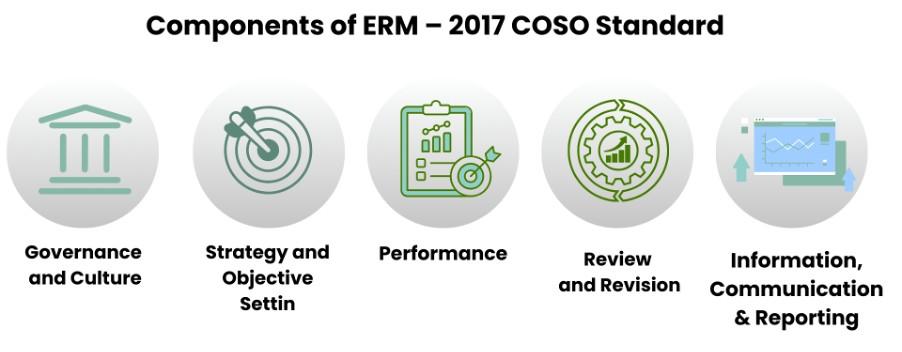
Comprising 5 key components as follows:
Governance and Corporate Culture (Governance and Culture): Establishing the foundation of risk management, such as values, responsibilities, and governance structures that promote risk management throughout the organization. The company clearly defines roles and responsibilities in risk management through its Enterprise Risk Management Policy.
Strategy and Objective Setting (Strategy and Objective Setting): Linking risk to the definition of business strategies and objectives, and establishing an acceptable risk appetite to achieve desired goals. The company formulates strategies by considering anticipated risks to ensure that strategies and plans can achieve their objectives.
Operations: The company identifies and assesses risks by considering the dimensions of likelihood and impact, prioritizes risks through the development of an Enterprise Risk Map, and defines risk response strategies that may affect the achievement of objectives. These responses include four forms: avoidance (reduction (transfer/sharing (Share/Transfer) and acceptance, as well as the development of a Risk Management Plan (Mitigation Plan) and the clear establishment of Key Risk Indicators (KRIs) for major risks.
Review and Revision (Review & Revision): The company monitors risk performance, both in terms of the progress of risk mitigation measures (Mitigation Plan) and the effectiveness of adherence to the risk management framework, and makes adjustments regularly in response to changes in the business context or when significant events occur.
Information, Communication, and Reporting (Information, Communication & Reporting): The use of necessary information and effective communication channels to ensure that stakeholders understand their roles and risk information. The company communicates risk information through monthly meetings of relevant committees and working groups and has guidelines for communicating essential information to raise risk awareness among employees within the organization through various activities and engagement initiatives.
Risks to the Company's Business Operations
Risk Register
| Risk Name | Risk Characteristics | Consequences | Management Measures | Related Risk Factors |
|---|---|---|---|---|
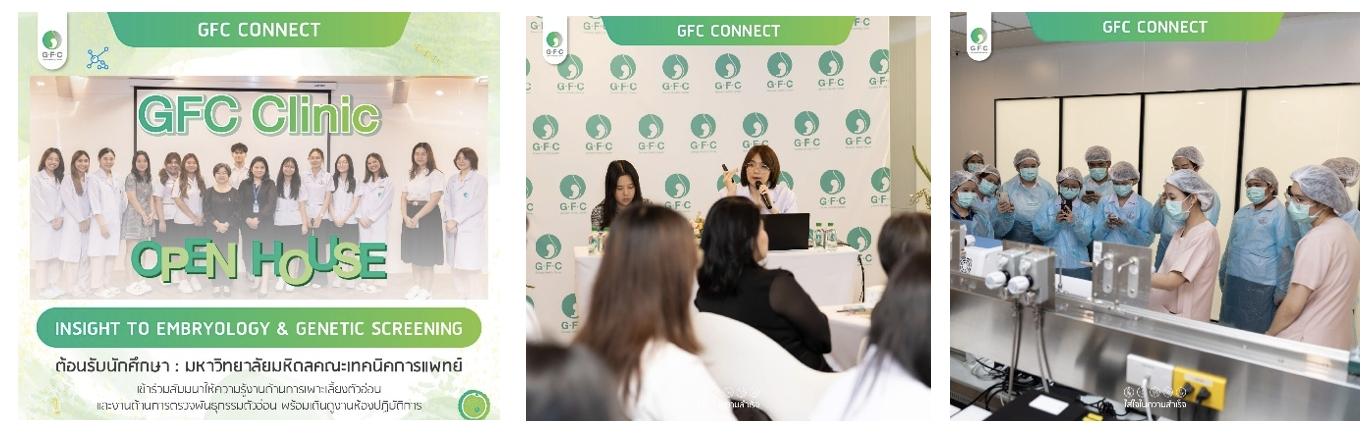
| Risk of a shortage of highly specialized personnel, such as medical teams and medical technologists. | As the Group operates a comprehensive medical service business for individuals with infertility issues, this business relies on high-quality and specialized medical professionals. These include physicians who must specialize in reproductive technology, and embryologists who require specific skills and expertise in each service process, such as ICSI (intracytoplasmic sperm injection) and laser procedures to extract cells for embryo abnormality testing. In a highly competitive market with increasing demand for personnel, while the supply of personnel for infertility treatment businesses remains limited, and given that these highly skilled and specialized personnel require significant time for training and accumulating experience to develop the necessary skills for this field, the Group may be affected by a shortage of such personnel in the future. However, currently, the Group does not face any shortage of personnel in these categories. This is because the Group recognizes the importance of medical personnel and has prepared personnel development plans, including Human Resource Management, to retain talented personnel within the Group for the long term. These plans involve promoting learning by encouraging employees to learn from real-world experience with guidance from executives or supervisors, fostering a positive work attitude to build organizational commitment, and regularly reviewing and adjusting compensation and welfare policies to ensure they are appropriate and fair. Additionally, a Succession Plan has been established to continuously enhance knowledge. Furthermore, the Group's executives maintain good relationships with physicians and medical technologists from various institutions, which serves as another crucial channel for broad access to such personnel. Therefore, the Group believes that the aforementioned approaches will mitigate the risk of personnel shortages in these professions. | A shortage of key personnel in critical professions directly related to the Group's business products and services may affect customer confidence, business operational continuity, as well as competitiveness and the company's long-term revenue. | In the future, the Group will implement projects for the in-house training of scientists and medical technologists. The Group will recruit medical technologists from various universities and host an Open House project, providing opportunities for medical technology students to attend seminars and visit the company's actual laboratories. This will include presentations on embryo culture knowledge and operational procedures delivered by the company's knowledgeable and expert scientists. This initiative aims to build brand awareness and credibility for the company, thereby attracting high-quality personnel in the future. Furthermore, in the long term, the Group plans to offer scholarships for suitable specialized scientific professions as part of its talent pipeline development process. These efforts will mitigate the risk of long-term shortages of specialized personnel and ensure continuity in efficient human resource management. | 739 · Description: Shortage or reliance on skilled workers · Info category: OPERATIONAL_RISK |
| Risk of changes in and compliance with relevant laws, regulations, directives, and government policies. | The Group's business operations are subject to the supervision of various agencies, such as the Ministry of Public Health, standards for providing services related to medical assisted reproductive technology under the Act for the Protection of Children Born from Assisted Reproductive Technology B.E. 2558 (2015), and/or other government agencies responsible for regulating licenses or various standards necessary for the Group's business operations, consumer protection laws, as well as laws pertaining to listed companies and capital markets, etc. The Group is therefore required to strictly comply with laws and regulations, including several specified conditions, in order to maintain its licenses, renew its licenses, and ensure continuous and sustainable business operations. During each renewal period, government agencies will inspect the Group's service processes. Should the Group fail to comply with the conditions of its licenses, standards, laws, or various orders from relevant government agencies, the relevant regulatory government agencies may consider suspending or revoking its licenses, or not renewing licenses for the Group, which could potentially impact the Group's operations. | If the Group is unable to comply with the laws and regulations of the relevant regulatory authorities, this may result in the relevant regulatory authorities considering the suspension or revocation of licenses, or the non-renewal of licenses for the Group. This could impact the Group's operations, as well as incur various expenses required for rectification, improvement, and bringing operations back into compliance, and also affect the organization's reputation and image. | In the past, the Group has been able to comply with established standards and has successfully obtained or maintained the necessary business licenses within the stipulated periods. There has never been any cause for the revocation of the Group's business licenses. Furthermore, the Group has established an internal department responsible for coordinating with government agencies and external regulatory bodies to obtain renewals or registrations of relevant licenses, as well as closely monitoring changes in regulations, rules, and laws pertinent to the Group. Additionally, the Group provides knowledge enhancement programs for management and employees on critical issues, including monitoring and auditing all related operational processes to ensure that the Group conducts its business in accordance with regulations, rules, laws, and relevant requirements appropriately and correctly. | 756 · Description: Change in laws and regulations · Info category: COMPLIANCE_RISK · 757 · Description: Laws and regulations is not favorable for doing business · Info category: COMPLIANCE_RISK · 730 · Description: Government policy · Info category: STRATEGIC_RISK |
| Risk from changes in medical technology | Due to the fact that providing medical services for individuals with infertility issues necessitates reliance on medical assisted reproductive technology, the medical team and medical technologists must constantly monitor and acquire knowledge regarding additional technologies and treatment methods. Furthermore, the provision of medical services for individuals with infertility issues requires the use of modern, efficient, and safe medical instruments and equipment. Therefore, should treatment technology change or become obsolete, the Group may be unable to meet customer demands, and customer decisions may be altered, which could consequently affect the Group's operational performance. | If unable to adapt to changes in treatment technology, the Group may not be able to meet customer demands, and customer decisions may change, which could impact the Group's financial position and operating performance. | The Group of Companies focuses on and prioritizes the quality of analytical testing and medical services provided to its clients through the use of efficient and safe medical instruments. These instruments are exclusively certified by the U.S. Food and Drug Administration (USFDA) and the Thai Food and Drug Administration (FDA), as these are considered the highest safety standards. The Group of Companies procures medical equipment and instruments from world-renowned distributors who are certified to these standards. These distributors also consistently provide information and collaborative learning opportunities regarding new products and technologies to the Group of Companies, enabling it to understand and prepare plans to address changes in medical treatment technology at all times. Should there be changes in treatment technology, the Group of Companies will conduct studies to understand these changes, the anticipated benefits, and the cost-effectiveness of investment before formulating a capital expenditure plan to acquire new technological medical equipment and instruments as replacements. Furthermore, the Group of Companies continuously monitors information and news regarding technological advancements by encouraging relevant personnel to regularly participate in international academic conferences. New innovation data is also reported to the Board of Directors or relevant committees to ensure that the Group of Companies can always adapt to changes in medical treatment technology, instruments, and equipment. | 732 · Description: Changes in technologies · Info category: STRATEGIC_RISK |
| Risk of reliance on key medical personnel | As the Group provides medical services for individuals with infertility issues, founded by a team of expert medical professionals and medical technologists, namely: 1) Assoc. Prof. Dr. Pitak Laokirkkiat, an obstetrician-gynecologist and reproductive technology specialist with over 25 years of experience in providing medical services for individuals with infertility issues; 2) Dr. Parawan Tangtham, a reproductive specialist; and 3) Ms. Piyada Wiratpong, a reproductive medical technologist. These personnel possess extensive knowledge, experience, and expertise, and are well-known and reputable within the medical community for treating infertility. They are key medical service providers for the Group, which is a crucial factor that enhances confidence and encourages patients to continuously choose GFC for their treatment. From 2022 to 2025, Assoc. Prof. Dr. Pitak Laokirkkiat and Dr. Parawan Tangtham collectively earned professional medical fees representing 71.67%, 62.98%, 34.39%, and 55.20% of the Group's total professional medical fees, respectively. Additionally, Ms. Piyada Wiratpong earned professional medical technologist fees representing 41.53%, 30.58%, 23.50%, and 47.57% of the Group's total professional medical technologist fees, respectively. Therefore, the Group may face risks due to its reliance on these key medical personnel. | Over-reliance on a single medical professional may cause the company to lose opportunities to build brand recognition with customers, potentially resulting in the loss of future customers and a disruption in revenue growth if customers do not trust other medical professionals. | The Group of Companies has recognized potential risks. In the past, the Group has developed the GFC brand to be more credible and widely recognized, moving away from a presentation model reliant on a single physician. Other physicians have been encouraged to play a role in driving the organization, for instance, by appearing in media to educate the public through online channels and organizing academic activities led by physicians and scientists to enhance public awareness. Data from the number of service recipients in the past period indicates a continuous increase in patients receiving treatment from physicians who are not the primary relied-upon physician. For the group of embryologists, the Group of Companies promotes scientists to acquire knowledge, expertise, and international certification, ensuring a continuous supply of personnel who can grow in their careers or reach a level comparable to Ms. Piyada Wiratpong. Furthermore, the Group regularly conducts in-house training programs for scientists to support future business expansion and manage the risk of over-reliance on individual personnel, thereby fostering sustainable future growth. | 738 · Description: Reliance on employees in key positions · Info category: OPERATIONAL_RISK |
| Risk from reliance on suppliers of pharmaceutical products, medical supplies, and laboratory analytical reagents | The procurement and maintenance of high-quality and sufficient pharmaceutical products, medical supplies, and laboratory reagents are crucial factors for providing medical services to individuals with infertility issues through innovative assisted reproductive technology. The distributor is a leading global group of companies specializing in the distribution of pharmaceutical products, medical supplies, instruments, and medical equipment, certified with international quality and standards. It also serves as a business partner with several global pharmaceutical product distribution groups. This partner has consistently demonstrated strong operational capabilities and possesses an extensive network, enabling them to consistently meet the Group's needs rapidly and efficiently. Regarding the second distributor, it is a group of companies acting as the sole distributor of laboratory reagents from a foreign manufacturer. These reagents are specifically used for Next-Generation Sequencing (NGS) analysis in embryo genetic testing laboratories and are exclusively compatible with NGS embryo genetic testing machines, which feature the most modern and suitable technology currently available. Therefore, the Group may face risks due to its reliance on these distributors. | Over-reliance on a single business partner may affect business continuity if the partner is unable to deliver medicines and medical supplies according to the specified quantity and timeframe. Furthermore, it may lead to missing opportunities to benefit from fair and competitive prices for medicines and medical supplies. This could result in limitations in managing service costs or operational costs, consequently impacting the company's financial position and operational performance in the long term. | The Group has recognized the risk associated with relying on such distributors. Therefore, it has a policy to procure pharmaceutical products and medical supplies from domestic manufacturers or authorized distributors of foreign manufacturers that meet the Group's standards. An Approved Vendor List for pharmaceutical and medical supply companies is maintained, with consideration given to several factors such as licenses and standard certifications, approval from the U.S. Food and Drug Administration (USFDA) and the Thai Food and Drug Administration (FDA), the ability to supply quality pharmaceutical products and medical supplies, reputation, physician demand, and the product delivery system to the Group, among others. There are no specific contracts or obligations regarding the procurement of pharmaceuticals, medical supplies, medical materials, and medical devices with any particular vendor. The Group is confident that it can manage the risk of relying on distributors of pharmaceutical products, medical supplies, and laboratory reagents. This is because the Group has maintained good relationships with the manufacturers of these pharmaceuticals, medical supplies, and laboratory reagents. In 2025, a Procurement Committee was appointed, responsible for establishing the company's procurement policies and related guidelines, evaluating and selecting suitable vendors or contractors, overseeing and monitoring the procurement process to ensure compliance with procedures, and regularly reporting to management. Concurrently, the procurement department and relevant units systematically control and monitor procurement operations, ensuring they are auditable. Furthermore, the Group has not experienced any issues with ordering or shortages of these pharmaceutical products, medical supplies, and laboratory reagents in the past. In addition, the Group maintains good relationships with key distributors in the market, enabling it to procure pharmaceuticals and medical supplies from other distributors besides those mentioned above. Moreover, most distributors are merely agents and not direct manufacturers of pharmaceutical products and medical supplies. Therefore, pharmaceutical products and medical supplies can be procured from alternative distributors without affecting transition costs or incurring any opportunity losses. | 735 · Description: Reliance on large partners / distributors or few partners / distributors · Info category: STRATEGIC_RISK |
| Risk of being sued for damages from medical services | Due to the Group's business operations involving comprehensive medical services for individuals with infertility issues, the Group is exposed to the risk of lawsuits from service recipients or related stakeholders. Such lawsuits could be filed against medical personnel or the Group itself, should service recipients or their relatives be dissatisfied with treatment outcomes that do not meet their expectations and/or the medical services provided by the Group. Although the Group has not been subject to any lawsuits or accusations related to its medical treatment or services in the past, any future litigation could adversely affect the Group's reputation and operations. | Being sued by service recipients or related stakeholders affects the organization's credibility, image, and reputation, as well as various expenses for potential legal proceedings or litigation, and the long-term sustainability of the company. | Given the aforementioned risks, the Group has clear plans and procedures to prevent the occurrence of the various incidents mentioned above. The Group has established service processes that must comply with relevant standards and criteria, which are under the supervision of the Ministry of Public Health, the Medical Council, and the service standards related to medical assisted reproductive technology as per the Act on the Protection of Children Born by Assisted Reproductive Technology B.E. 2558 (2015). Throughout the past, the Group's medical personnel have strictly adhered to the prescribed standards. Furthermore, prior to every service, the Group requires service recipients to sign a consent form for all treatment steps, in accordance with the Medical Council's regulations. This ensures that service recipients and their spouses are informed of the service procedures, success rates, precautions, and potential risks associated with the services. After receiving services from the Group, service recipients are asked to evaluate their satisfaction with the services and treatments received, in order to assess service quality and operational efficiency. This serves to develop and improve the Group's services and also acts as a measure to prevent the risk of lawsuits claiming damages. Furthermore, should complaints arise or service recipients express dissatisfaction with the services provided, the Group has policies and procedures in place to address them according to the severity of the situation, such as actions taken by relevant nurses, doctors, the marketing department, and senior management, among others. Additionally, in 2025, a Quality Committee was appointed with the role and responsibility to oversee, supervise, and develop the quality of services and work processes to comply with international standards and relevant professional standards, as well as to establish an incident reporting process within the organization. This promotes a culture of continuous operational performance improvement to ensure accurate and timely reporting and communication of information, as well as genuine root cause analysis to prevent recurring errors, and to define preventive measures to systematically and effectively reduce potential risks. This also helps elevate the quality of services and treatment, prevent and mitigate long-term negative impacts, and build confidence among stakeholders in all sectors. As of December 31, 2025, the Group has not faced any significant lawsuits claiming damages from medical treatment and/or services. | 1723 · Description: Legal risk · Info category: COMPLIANCE_RISK |
| Risk from withholding tax remittance in the event that the Revenue Department's assessment of physicians' personal income tax differs from the company's guidelines. | As physicians are key personnel in providing services for the Group, the Group has entered into a written agreement under the "Agreement for the Use of Premises for Independent Professional Practice" with specialist physicians who provide treatment to service recipients for the Group. The purpose of this agreement is for physicians to use the Group's premises, diagnostic equipment, medicines, and medical supplies, and for physicians to share revenue with the Group. Physicians are not employees of the Group; rather, they authorize the Group to collect medical fees from service recipients and remit them to the physicians. The Group will provide the necessary premises and equipment for diagnosing service recipients. If considered in accordance with the guidelines of the Revenue Department regarding agreements between hospitals and physicians similar to those of the Group, income from medical examinations and treatments received by physicians from service recipients is classified as income from independent professional services under Section 40(6) of the Revenue Code. When the Group collects medical examination fees or medical personnel fees from service recipients and remits such income to the physicians, the Group is therefore not required to withhold income tax before remitting the revenue share to the physicians. However, in practice, the Revenue Department's collection of such taxes from physicians' medical examination income may differ from the criteria applied by the Group. Therefore, the Group may face a risk of not remitting withholding tax from physicians' income, which could result in the Group being liable for withholding income tax, tax surcharges, and other related taxes, in the event of differing interpretations of tax law regarding the classification of such physician compensation income. | May incur liability for withholding income tax and tax surcharges, as well as other relevant taxes, should there be differing interpretations of tax law concerning the classification of such medical remuneration income. This would impact the company's operational performance and corporate image and reputation. | The Group of Companies engaged a tax advisor to assess the correctness of the nature of income for which the Group of Companies pays professional fees to medical practitioners. The tax advisor has provided an opinion that these items constitute income under Section 40(6) of the Revenue Code, consistent with the Group of Companies' current practice. Furthermore, to mitigate the impact of future tax risk factors, the Group of Companies has stipulated in its contracts with medical personnel that the medical practitioners shall be responsible for any expenses that may arise from additional tax assessments imposed on the Group of Companies due to individual doctors' withholding tax matters. | 758 · Description: Violations of laws and regulations · Info category: COMPLIANCE_RISK |
| Risk from income volatility due to economic slowdown | Given the slowing economic conditions and the uncertain economic outlook for 2025 extending into 2026, which remains a challenging period for businesses, coupled with global geopolitical conflicts, the purchasing power of service recipients has decreased. Decisions to spend on high-value services are being postponed or delayed, causing the group's revenue to fluctuate or potentially slow down. Furthermore, competition is likely to intensify, especially in Bangkok and its vicinity, due to the concentration of numerous large hospitals and specialized clinics. Data from the KASIKORN Research Center indicates that the total infertility market value in 2025 is expected to experience slower growth compared to the previous year. This is attributed to a deceleration in foreign patients seeking services, in line with the slowing global economy, and consistent with the declining trend of foreign tourists in Thailand compared to the previous year. Meanwhile, the Thai market continues to face pressure from a sluggish economy, with a decreasing trend in the willingness to purchase goods or services, leading some to postpone their family planning. This suggests that the revenue growth rate for infertility treatment service providers this year is expected to decline, as the number of patients/egg retrieval cycles is not accelerating as in the previous year, particularly in Q1, which is still influenced by the preference for giving birth in the Year of the Dragon. Concurrently, businesses also face pressure from high operating costs, but these are aimed at generating continuous future revenue, such as investments in branch expansion or new technologies. | Economic fluctuations impact consumer purchasing power and decision-making, consequently affecting cash flow in business operations and revenue growth, which may not align with predetermined targets. | However, the revenue of this business significantly depends on the standard of service and treatment, and the success rate. This leads the Group to develop service quality, elevate treatment in various stages, and invest in new technologies that will help increase the success rate. This is coupled with formulating strategies to build business partnerships with major private hospital groups to create and attract new customer segments and establish a competitive advantage for long-term revenue and profit margin growth, as well as adapting marketing strategies to align with rapidly changing situations. Furthermore, the Group continues to identify opportunities among international clients, which remains a high-potential market. Therefore, marketing efforts are focused on attracting this customer segment to increase service utilization, both in 2025 and continuously into 2026. Moreover, the infertility treatment service business has growth opportunities in the future due to more flexible adjustments to relevant regulations, particularly China's pro-natalist policies, the enforcement of the Equal Marriage Act, and the preparation to amend Thailand's surrogacy laws. In addition, this includes the growing global trend of egg freezing. With GFC Group's strengths in knowledgeable, capable, and specialized personnel, especially the team of doctors, nurses, and embryologists, reflected by a treatment success rate that remains above standard, these factors will continue to be the Group's strengths, enhancing its competitive potential and continuously generating growing revenue in the next period. | 1725 · Description: Income volatility · Info category: FINANCIAL_RISK |
Risks to Securities Holders' Investment
Risk Register
| Risk Name | Risk Characteristics | Consequences | Management Measures | Related Risk Factors |
|---|---|---|---|---|
| Risk from major shareholders collectively holding over 25.00 percent of shares. | The Group's major shareholder is Assoc. Prof. Dr. Pitak Laohgerdkiat, Chairman of the Group's Board of Directors, who, as of December 31, 2025, holds 25.76% of the total paid-up capital of the Group. This may enable the said shareholder to exercise the right to object to or disapprove resolutions at shareholders' meetings on various matters where the Group's articles of association or relevant laws require a vote of not less than three-fourths of the total votes of shareholders attending the meeting and entitled to vote. Consequently, other shareholders of the Group may face a risk in accumulating votes to counterbalance and scrutinize matters proposed by the major shareholder. | This may slow down strategic decision-making if opinions diverge, particularly if the major shareholder group disagrees. Conversely, decisions may be made quickly if opinions align with the major shareholder group. However, issues or concerns may arise during voting due to the control of power by the majority, which might be perceived as lacking sufficient transparency. Furthermore, presenting issues from the minority may prove difficult to gain approval, especially if the matters under discussion involve major stakeholders. | The Group recognizes the importance of balancing power, and therefore has clearly and transparently defined the scope of authority and responsibilities of its various committees. Measures have been established for related party transactions involving directors, major shareholders, executives, controlling persons, and individuals who may have conflicts of interest, whereby such individuals shall not have the right to vote on the approval of such transactions. This also includes the establishment of an independent audit committee to participate in the Group's board of directors, for transparency and to assure shareholders that they can review operations and maintain a certain level of checks and balances as representatives of minority shareholders. Furthermore, it assists in scrutinizing various matters before presenting them to the shareholders' meeting. The Group's board structure comprises independent directors accounting for more than half of the total number of directors of the Group. (1) (A total of 4 independent directors out of 9 total directors of the Group.) Furthermore, once the Group is listed on the Stock Exchange of Thailand, it must disclose information and comply with the relevant rules and regulations of the Securities and Exchange Commission (SEC) and the Stock Exchange of Thailand (SET), such as related party transactions and the acquisition and disposal of the Group's assets, etc., for the utmost benefit of the Group and its shareholders. (1) Two independent directors, Ms. Karndee Leopairote and Mr. Ek Bhadra-thanakul, have submitted their resignations from their positions as company directors, effective December 16, 2025. | 2970 · Description: Risk of the company having a majority shareholder holding > 25% of shares · Info category: HOLDER_RISK |
| Investment Risk for Securities Holders | Following the initial public offering of ordinary shares to the public or general investors, the market price of the Group's ordinary shares may tend to fluctuate due to various factors, including both internal risk factors of the Group and external factors, some of which are beyond the Group's control, such as:
These aforementioned factors and other factors may cause fluctuations in the market price of the Group's ordinary shares, which may result in investors being unable to sell the Group's shares at the anticipated price, or the shares may be traded at a price lower than the offering price of the Group's ordinary shares in this instance. | The market price of the Company Group's ordinary shares may fluctuate according to market conditions due to uncontrollable factors, which may result in investors being unable to sell the Company Group's shares at the anticipated price, or they may be traded at a price lower than the offering price of the Company Group's ordinary shares. | The company continuously evaluates economic conditions, industry, and related markets to formulate annual strategies and business plans. Furthermore, it monitors the movements of various factors that may impact the performance of the group of companies, enabling timely decisions to adjust strategies, operational plans, and response approaches. | 769 · Other name: Risk from the volatility of the company group's stock prices, which may result in significant losses. · Description: Other · Info category: HOLDER_RISK |