

Sustainability · 2025
In this section52 topics
- Sustainability Policy2 items
- Sustainability Goals & UN SDGs3 items
- Policy Review3 items
- Business Value Chain1 item
- Stakeholder Analysis1 item
- Environmental Policy & Guidelines3 items
- Environmental Policy Review3 items
- Energy — Plan & Guidelines2 items
- Energy — Electricity Consumption1 item
- Energy — Fuel Consumption1 item
- Energy — Targets2 items
- Energy — Performance & Outcomes2 items
- Water — Plan & Guidelines2 items
- Water — Withdrawal, Discharge & Consumption1 item
- Water — Targets2 items
- Water — Performance & Outcomes2 items
- Waste — Plan & Guidelines2 items
- Waste — Generation, Disposal & Recycling1 item
- Waste — Targets2 items
- Waste — Performance & Outcomes2 items
- GHG — Plan & Guidelines2 items
- GHG — Emissions1 item
- GHG — Emissions Verification2 items
- GHG — Principles & Standards1 item
- GHG — Targets1 item
- GHG Targets — Net Zero1 item
- GHG — Performance & Outcomes2 items
- Environmental Legal Incidents1 item
- Other Environmental Management1 item
- Social Policy & Guidelines3 items
- Social Policy Review3 items
- Social — Principles & Standards Practised1 item
- Human Rights Due Diligence2 items
- Employees — Plan & Guidelines3 items
- Employees — Workforce1 item
- Employees — Remuneration & Provident Fund1 item
- Employees — Training & Development1 item
- Employees — Occupational Health & Safety1 item
- Employees — Labour Relations1 item
- Employees — Employee Representation2 items
- Employees — Targets2 items
- Employees — Performance & Outcomes2 items
- Customers — Plan & Guidelines3 items
- Customers — Satisfaction Results1 item
- Customers — Targets1 item
- Customers — Performance & Outcomes2 items
- Community & Social — Plan & Guidelines3 items
- Community & Social — Targets2 items
- Community & Social — Performance & Outcomes2 items
- Other Social Management1 item
- Law Violation Incidents1 item
- Law Violations — Case Detail & Corrective Measures1 item
Sustainability Policy
Has a Sustainability Policy
Yes
Policy Description
The company conducts its business with full commitment to environmental, social, and economic responsibility to achieve the objectives of sustainable development, in accordance with the three pillars of Environmental, Social, and Governance (ESG) framework and aligned with the United Nations Sustainable Development Goals (SDGs). The company adheres to and prioritizes its duties and responsibilities towards all stakeholder groups, including shareholders, customers, employees, competitors, business partners, and communities, to foster a commitment to sustainable business operations. It is also dedicated to operating as a good role model for society, with ethical principles and good corporate governance practices, creating positive impacts for society and the environment.
The company recognizes the importance of defining commitments to demonstrate its intentions, to achieve its stated vision, as well as to monitor, observe, and review the commitments it has set. Therefore, the company has established a "Sustainable Development Policy" to serve as a framework and guideline for the group's sustainable operations.
Sustainability Goals & UN SDGs
Has Sustainability Goals
Yes
Goals Description
The company has set its ultimate sustainability goal: "To be a leading ASEAN organization specializing in infertility treatment, committed to responsibility and reducing environmental impact, promoting maximum positive social engagement, and providing services according to international standards."
The aforementioned goals align with the operations under the three frameworks of Environmental, Social, and Governance (ESG), which the Company has adopted as its main guideline for systematically setting strategies and driving operations through projects and activities under key operational frameworks, namely GFC We Green, GFC We Care, and GFC We Forward, to create sustainable value for all stakeholder groups of the Company.
GFC We Green
Committed to reducing environmental impact through various processes such as resource reduction, climate change management, sustainable waste management, and environmentally friendly procurement.
GFC We Care
Focused on creating positive social change through supporting development and knowledge transfer to personnel, scientists, women, and children, enhancing the quality of life for communities and society.
GFC We Forward
Operate business transparently with
Good corporate governance, efficient risk management, anti-corruption, and sustainable growth
Management of key business issues
The Company has different approaches to managing key sustainability issues depending on the nature of each issue. Fundamental issues focus on compliance with relevant laws and standards, as well as continuous monitoring and reporting of operational results to the Good Corporate Governance and Social Responsibility Committee. The Company aims to improve business processes by setting short-term, medium-term, and long-term goals and performance indicators, emphasizing business growth alongside reducing environmental, social, and governance impacts, thereby creating sustainable value for all stakeholder groups, in line with the United Nations Sustainable Development Goals ( Sustainable Development Goals, SDGs)
In 2025, the Company reviewed its sustainable development policy and key business issues, covering all three dimensions of the sustainable development framework: Environment, Social, and Governance. This is to promote and create positive impacts on society and the environment, adhering to the principles of good corporate governance, anti-corruption, and responding to the United Nations Sustainable Development Goals SDG 3, SDG 4, SDG 5, SDG 7, SDG 8, SDG 10, SDG 12, SDG 13, SDG 16, and SDG 17.
Key sustainability goals
Key Sustainability Issues
Goal Details
Goals
Performance
Environment
Addressing climate change issues
Reduce electricity consumption (compared to 2024/person)
Decreased by 5 percent
Increased by 105 percent
Reduce water consumption (compared to 2024/person)
Decreased by 5 percent
Increased by 186 percent
Reduce paper consumption (compared to 2024/person)
Decreased by 5 percent
Decreased by 0.54 percent
Reduce the amount of non-hazardous/infectious waste (compared to 2024/person)
Decreased by 5 percent
Decreased by 52 percent
Net-zero greenhouse gas emissions
By 2050
574 KgCO2e
Greenhouse gas emissions, Scope 1, 2, 3 (compared to base year 2022)
Decreased by 8 percent
Increased by 35 percent
Violation of environmental laws
0
0
Social
Care, equal treatment, and fairness
Employee satisfaction
70 percent
78 percent
Number of employee skill development trainings
16 hours / person / year
24 hours / person / year
Employee turnover rate
5 percent
2.89 percent
Human rights violations / Violations against key stakeholders of the company
0
1
Accident rate from work of employees and related parties
0
0
Improve quality of life and well-being
Develop personnel and scientists to advance fertility treatments through Open House activities
1 time/year
1 time/year
Support the well-being of communities near the company
1 community
1 community
Projects that assist communities and society in collaboration with partners
5 projects
5 projects
Corporate Governance
Comply with laws regarding services for infertile individuals
Violation of laws regarding services for infertile individuals
0
0
Decreased birth rate
Activities to promote fertility in collaboration with partners
1 project
1 project
Anti-corruption
Violations related to business ethics, fraud, and corruption
0
1
Employees trained in business ethics, anti-fraud, and anti-corruption
100 percent
100 percent
UN Sustainable Development Goals
| SDG Goal |
|---|
| Goal 3 Good Health and Well-being |
| Goal 4 Quality Education |
| Goal 5 Gender Equality |
| Goal 7 Affordable and Clean Energy |
| Goal 8 Decent Work and Economic Growth |
| Goal 10 Reduce Inequalities |
| Goal 12 Responsible Consumption and Production |
| Goal 13 Climate Action |
| Goal 16 Peace, Justice and Strong Institutions |
| Goal 17 Partnerships for the Goals |
Policy Review
Policy Reviewed This Year
Yes
Policy Changed This Year
Yes
Review Details
Environmental Policy
Genesis Fertility Center Public Company Limited and its subsidiaries recognize their environmental responsibility in conducting business for sustainable development, in accordance with the Group's sustainable development policy and aligned with the Sustainable Development Goals ( SDGs: Sustainable Development Goals), with the following guidelines:
The Group is committed to strictly complying with environmental laws, agreements, and other regulations related to its operations, and is dedicated to achieving its established environmental objectives and targets.
There are processes to prevent and mitigate environmental impacts resulting from the Group's operational activities, including both direct and indirect impacts.
Modern innovations are developed and promoted, and the environmental management system is continuously improved, while fostering a good understanding among all employees to ensure effective environmental practices and management.
Recognize the importance of communication with all stakeholder groups of the company and provide good cooperation in environmental conservation activities.
There is management of energy, utilities, and waste such as water, electricity, solid waste, etc., to maximize their benefits, reduce environmental impact, and promote efficient use of limited resources by reducing consumption, utilizing them cost-effectively, and recycling.
Foster awareness of environmental conservation, greenhouse gas emission reduction, and biodiversity preservation by conducting training for all employees and disseminating knowledge to all stakeholder groups of the company.
Business Value Chain
Value Chain Description
The company prioritizes comprehensive consideration of both internal and external stakeholders, alongside managing the sustainability of activities throughout the business value chain. The group's value chain encompasses the procurement of quality raw materials and resources for service provision, research and development of services, as well as the study and adoption of new technologies, tools, and equipment to enhance efficiency, effectiveness, and environmental friendliness. Furthermore, the company monitors and evaluates customer satisfaction, including a system for receiving and managing complaints to continuously improve and develop service quality. The main activities in the company's value chain are as follows:
Core Activities | Details |
| Continuous study and development of services to meet customer needs, including the study of new technologies, tools, and equipment to help make services efficient, effective, and environmentally friendly. |
| Procurement of medicines, medical supplies, medical instruments and equipment, and laboratory services, with consideration for quality, standards, and safety. |
| Provision of quality, standard, and reasonably priced services, with integrity and ethics towards customers. |
| Advertising and public relations, communicating articles and knowledge about |
| Customer satisfaction is monitored and measured for development and improvement. |
Analysis and prioritization of stakeholders in the business value chain
The company has analyzed and prioritized stakeholders by considering the relationship between the company's core activities and relevant stakeholders, who may be affected by the company's operations, both positively and negatively, including existing impacts and potential future impacts. The prioritization is as follows: 1. Shareholders, 2. Customers, 3. Employees, 4. Competitors, 5. Partners, and 6. Community.
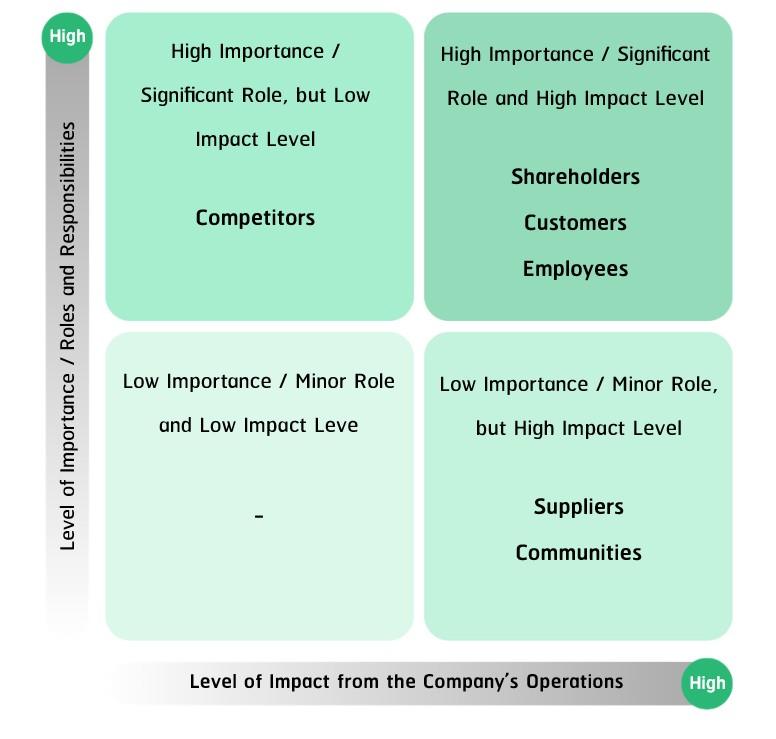
Has high importance/role and high impact (High Importance / High Impact), including:
Shareholders
Customers
Employees
This group of stakeholders plays a crucial role in the company's success and sustainability, while also being highly impacted by the company's operations. Therefore, the company places the highest importance on them, emphasizing close communication, continuous engagement, and appropriate expectation management.
Has high importance/role but low impact (High Importance / Low Impact), including:
Competitors
This group of stakeholders influences the competitive environment and business direction but is directly impacted by the company's operations at a low level. Therefore, the company focuses on monitoring situations, adhering to fair competition rules, and conducting business under ethical principles.
Has low importance/role but high impact (Low Importance / High Impact), including:
Partners
Community
This group of stakeholders may have a minor role in determining the company's strategic direction, but the company's operations may have a high impact on them. Therefore, the company emphasizes appropriate impact management, transparent communication, and listening to stakeholder feedback to foster good relationships and mitigate potential negative impacts.
Stakeholder Analysis
Stakeholder Analysis
| Stakeholder Type | Stakeholders | Stakeholder Expectations | Response to Expectations | Communication Activities |
|---|---|---|---|---|
| External stakeholders | 2913 · Description: Shareholders | • Efficient and successful management in developing various projects for the benefit of the company and shareholders • Management of opportunities and risks in the organization's business operations • Good operational performance and continuous and sustainable business growth • Good corporate governance • Anti-corruption and bribery • Appropriate qualifications of the Board of Directors and executives • Payment of dividends as specified • Complete, accurate, and timely disclosure of information | • Shareholder meetings are held.
• Shareholders are given the opportunity to propose meeting agendas and nominate individuals for election as directors in advance.
• Information is disclosed accurately and in a timely manner, such as financial data, annual reports, and other relevant information.
• Analyst meetings are organized.
• Participation in "Opportunity Day" events for listed companies to meet investors.
• Shareholders and investors are given the opportunity to visit the company's operations. | 2938 · Description: Visit · 2944 · Description: Annual General Meeting (AGM) |
| External stakeholders | 2923 · Description: Customers | • Providing quality services, meeting standards, and offering appropriate pricing
• Adhering to agreements and contracts fairly
• Maintaining integrity and ethics towards customers
• Protecting customer confidentiality
• Promptness in service delivery
• And providing customer assistance | Prioritize and be accountable for ensuring services meet established standards and align with customer requirements. Monitor and evaluate customer satisfaction to facilitate service development and improvement, and to address customer complaints. | 2947 · Description: Satisfaction Survey |
| Internal stakeholders | 2921 · Description: Employees | • Fair compensation and other benefits
• Provision of welfare benefits no less than legally mandated or more as appropriate
• Occupational health and safety care
• Training, knowledge development, potential enhancement, and career advancement, including providing opportunities for employees to develop skills in other areas | • Treat and act equally and fairly
• Provide welfare benefits no less than legally mandated
• Oversee occupational health and safety
• Support the development of knowledge and work skills | 2942 · Description: Internal Meeting · 2946 · Description: Employee Engagement Survey · 2948 · Description: Training / Seminar |
| External stakeholders | 2898 · Description: Competitors | • Do not create unfair competitive advantages.
• Adhere to the framework of good competition rules, uphold the standards of fair competitive practices, and refrain from using dishonest methods to damage competitors' reputation. | Refrain from any action to create an unfair competitive advantage. Do not seek competitors' trade secrets through dishonest means. Conduct business competition transparently. | 2939 · Description: Press Release |
| External stakeholders | 2899 · Description: Suppliers | • Procurement processes and fair contractual terms or agreements
• Supporting potential and developing collaborative projects to further mutual business growth objectives
• Social and environmental responsibility, including monitoring and evaluating partners to foster sustainable inter-business operations
• The company is capable of adhering to contracts, agreements, and business payment terms, as well as transparent, fair, and verifiable procurement conditions, to ensure equal opportunities for qualified partners to collaborate with the company. | Adhere to procurement processes and contractual terms in good faith.
Conduct annual meetings with business partners to improve and develop procurement processes and mutually fair contractual terms or agreements.
Implement continuous and sustainable processes for selecting and evaluating the performance of business partners.
Assess risks and evaluate business partners.
Organize meetings, training sessions, and seminars with business partners and suppliers.
Arrange visits to the premises of business partners and the company.
Communicate the Supplier Code of Conduct to business partners and suppliers, ensuring strict adherence to promote transparent and sustainable business standards together. | 2938 · Description: Visit · 2943 · Description: External Meeting |
| External stakeholders | 2902 · Description: Community | • Prevent potential impacts from business operations on the community
• Be socially and environmentally responsible
• Promptly resolve and mitigate impacts arising from operations
• Provide opportunities for participation and listen to feedback from the surrounding community and society
• Strengthen communities, improve quality of life and well-being alongside business growth
• Support and promote community enterprises
• Develop the environment and provide beneficial knowledge for community and social development | • Utilize business knowledge and experience to develop projects that can concretely benefit the community, with long-term progress and success monitoring and evaluation. • Implement prevention, impact reduction, management, and oversight to ensure that the company does not create or cause negative impacts on the environment and community. • Meetings to listen and exchange opinions with the community and society. • Support and organize activities in collaboration with the broader community and society. | 2940 · Description: Social Event |
Environmental Policy & Guidelines
Has an Environmental Policy
Yes
Policy Description
The Company recognizes its environmental responsibility in conducting business and has established an "Environmental Policy," committing to operate in strict compliance with relevant environmental laws, agreements, and regulations. It also sets goals and drives operations to achieve environmental objectives concretely, emphasizing the prevention and reduction of direct and indirect environmental impacts from operations, coupled with the development and promotion of modern innovations, continuous improvement of environmental management systems, and enhancing knowledge and understanding among all levels of employees to ensure efficient environmental operations. Furthermore, the Group emphasizes communication and engagement with all stakeholder groups, as well as the management of energy, resources, and waste efficiently and for maximum benefit, following the principles of reduce, reuse, and recycle. It also promotes environmental conservation awareness, greenhouse gas emission reduction, and biodiversity preservation through continuous training and knowledge dissemination to employees and stakeholders. In 2025, there were no violations of environmental laws.
Environmental Policy
Genesis Fertility Center Public Company Limited and its subsidiaries recognize their environmental responsibility in conducting business for sustainable development, in accordance with the Group's sustainable development policy and aligned with the Sustainable Development Goals ( SDGs: Sustainable Development Goals) with the following guidelines:
The Group is committed to strictly complying with environmental laws, agreements, and other regulations related to its operations, and is dedicated to achieving its established environmental objectives and targets.
There are processes to prevent and reduce environmental impacts resulting from the Group's operational activities, including both direct and indirect impacts.
Modern innovations are continuously developed and promoted, and environmental management systems are continuously improved, while fostering a good understanding among all employees to ensure effective environmental practices and management.
Recognizing the importance of communication with all stakeholder groups of the company and providing good cooperation in environmental conservation activities.
Energy, utilities, and waste such as water, electricity, solid waste, etc., are managed for maximum benefit to reduce environmental impact. Campaigns are also conducted to promote the efficient use of limited resources through reduction, efficient utilization, and recycling.
Fostering awareness of environmental conservation, greenhouse gas emission reduction, and biodiversity preservation by conducting training for all employees and disseminating knowledge to all stakeholder groups of the company.
Furthermore, the Company prioritizes the safety and hygiene of its personnel and surrounding communities, promoting and instilling awareness of quality, safety, occupational health, and environmental responsibility as a daily way of life. It supports the appropriate use of resources by establishing the following guidelines:
Guidelines
The Group prioritizes environmental operations in accordance with international standards by establishing quality, safety, occupational health, and environmental requirements and standards that cover relevant national and international laws and regulations. All company personnel must strictly study and adhere to these policies, requirements, and standards.
The Group is committed to reducing losses and preventing all types of accidents by implementing preventive measures such as regular environmental risk assessments, maintaining tools, equipment, and various systems in ready-to-use condition to reduce the likelihood of accidents, fires, and other hazards that may affect employees, communities, and the environment.
The Group communicates environmental information to personnel and stakeholders through continuous training and public relations, ensuring that company employees, as well as employees of partners and contractors, are aware of and understand policies, regulations, and practices related to quality, safety, occupational health, and the environment.
The Group adheres to the principles of sustainable development by promoting awareness of social and environmental responsibility among personnel at all levels through various projects and activities, such as greenhouse gas reduction projects, energy conservation projects, the selection of clean energy, and environmental restoration projects to preserve biodiversity in communities.
The Group has an emergency and crisis management system, providing emergency action plans for all operational areas, covering incidents that may affect the environment and safety, such as fires, chemical spills, or hazardous waste. Additionally, emergency drills are conducted regularly to ensure that all employees are prepared to handle emergency situations.
If operations are found to potentially cause severe environmental impact, employees have the right to temporarily cease work and must immediately inform their supervisor for investigation and corrective action according to established procedures.
The company has established a Safety, Occupational Health, and Working Environment Committee (SHE Committee) with the primary duties of inspecting, recommending safety measures, promoting safety activities, and coordinating with management to create a safe working environment as required by law.
Environmental Guidelines
| Guideline |
|---|
| Electricity Management |
| Fuel Management |
| Renewable/Clean Energy Management |
| Water Management |
| Waste Management |
| Biodiversity Management |
| Greenhouse Gas and Climate Change Management |
Environmental Policy Review
Policy Reviewed This Year
Yes
Review Details
The Company regularly reviews its environmental policies, practices, and targets annually, and conducts its business in strict compliance with relevant environmental laws, agreements, and regulations. It also sets goals and drives operations to achieve concrete environmental objectives, with an emphasis on preventing and mitigating direct and indirect environmental impacts from its operations. This is coupled with the development and promotion of modern innovations, including continuous improvement of its environmental management system, and enhancing knowledge and understanding among employees at all levels to ensure efficient environmental operations. Furthermore, the Company prioritizes communication and engagement with all stakeholder groups, as well as the efficient and optimal management of energy, resources, and waste, in accordance with the principles of reduce, reuse, and recycle. It also promotes environmental conservation awareness, greenhouse gas emission reduction, and biodiversity preservation through continuous training and knowledge dissemination to employees and stakeholders. In 2025, there were no violations of environmental laws.
Policies & Guidelines Changed
| Change |
|---|
| Electricity Management |
| Fuel Management |
| Renewable/Clean Energy Management |
| Water Management |
| Waste Management |
| Biodiversity Management |
| Greenhouse Gas and Climate Change Management |
Energy — Plan & Guidelines
Has an Energy Management Plan
Yes
Plan Description
The Company prioritizes efficient energy management by aiming to reduce unnecessary electricity consumption and increase the use of clean energy from solar power (Solar Cell) to help reduce greenhouse gas emissions and mitigate environmental impact. The Company plans to install solar cells on the rooftop of the GFC Rama 9 International branch building.
Energy — Electricity Consumption
Electricity Consumption
| Metric | Current Year | Previous Year | Two Years Ago |
|---|---|---|---|
| Total electricity consumption within the organization (Kilowatt-Hours) | 915,204 | 350,297 | 344,805 |
| Electricity purchased for consumption from non-renewable energy sources (Kilowatt-Hours) | 915,204 | 350,297 | 344,805 |
| Electricity purchased or generated for consumption from renewable energy sources (Kilowatt-Hours) |
Energy — Fuel Consumption
Fuel Consumption
| Metric | Current Year | Previous Year | Two Years Ago |
|---|---|---|---|
| Crude oil (Barrels) | |||
| Coal (Metric tonnes) | |||
| Jet fuel (Litres) | |||
| Diesel (Litres) | 1,660.02 | 17.76 | 12.69 |
| Gasoline (Litres) | 457.98 | 41.29 | 52.24 |
| Fuel oil (Litres) | |||
| Natural gas (Standard cubic feet) | |||
| LPG (Kilograms) | 0 | 1.76 | 3.59 |
| Steam (Metric tonnes) |
Energy — Targets
Has Set Targets
Yes
Targets
| Target | Base Year | Base Year Value | Target Year | Target Change (%) | Unit | Per Unit (Intensity) | Per Unit — Please Specify |
|---|---|---|---|---|---|---|---|
| Reduction of electricity purchased for consumption | 2,024 | 3,434 | 2,025 | 5 | Kilowatt-hour | Person(employee) | Person(employee) |
Energy — Performance & Outcomes
Has Performance Results
Yes
Performance Description
The company prioritizes efficient energy management by aiming to reduce unnecessary electricity consumption and increase the use of clean energy from solar power (Solar Cell) to help reduce greenhouse gas emissions and minimize environmental impact. Furthermore, the company promotes an energy-saving culture within the organization and encourages maximum energy efficiency among personnel at all levels.
In 2025, the company aims to reduce electricity consumption (compared to 2024/person) by 5 percent. Operational results show a 105 percent increase in electricity consumption compared to 2024, which is a result of operational expansion and the opening of the new "Rama 9 International" branch. This increase aligns with the organization's growth plan, and the company has designed building systems and electrical equipment usage for maximum efficiency to ensure balanced and sustainable growth.
Measures implemented by the group of companies include:
Inspecting and maintaining electrical equipment and high-energy-consuming tools to ensure they operate efficiently.
Implementing energy-saving technologies such as LED lighting systems and energy-efficient equipment. Electrical appliances with energy-saving certification labels.
Implementing measures to switch off lights for one hour during lunch breaks and to switch off lights whenever they are not in use.
Continuously publicizing and communicating energy-saving practices to raise awareness among everyone in the organization.
Water — Plan & Guidelines
Has a Water Management Plan
Yes
Plan Description
The Company prioritizes and supports the efficient use of water resources to mitigate environmental impacts and promote sustainable water management practices. The Group has implemented measures to reduce unnecessary water consumption and prevent water loss in operational processes. Furthermore, it continuously enhances water use efficiency across all organizational activities.
Water — Withdrawal, Discharge & Consumption
Water Withdrawal, Discharge & Consumption
| Metric | Current Year | Previous Year | Two Years Ago |
|---|---|---|---|
| Total water withdrawal (Cubic meters) | 2,667 | 732 | 313 |
| Total water withdrawal by third-party water (Cubic meters) | 2,667 | 732 | 313 |
| Total water withdrawal by surface water (Cubic meters) | |||
| Total water withdrawal by groundwater (Cubic meters) | |||
| Total water withdrawal by seawater (Cubic meters) | |||
| Total water withdrawal by produced water (Cubic meters) | |||
| Percentage of wastewater treated before discharge (%) | |||
| Total water discharge (Cubic meters) | |||
| Total water discharge to third-party water (Cubic meters) | |||
| Total water discharge to surface water (Cubic meters) | |||
| Total water discharge to groundwater (Cubic meters) | |||
| Total water discharge to seawater (Cubic meters) | |||
| Total water consumption (Cubic meters) | 2,667 | 732 | 313 |
| Recycled water (Cubic meters) |
Water — Targets
Has Set Targets
Yes
Targets
| Target | Base Year | Base Year Value | Target Year | Target Change (%) | Unit | Per Unit (Intensity) | Per Unit — Please Specify |
|---|---|---|---|---|---|---|---|
| Reduction of water withdrawal | 2,024 | 7.1 | 2,025 | 5 | Cubic meters | Person(employee) | Person(employee) |
Water — Performance & Outcomes
Has Performance Results
Yes
Performance Description
The company prioritizes and supports the efficient use of water resources to minimize environmental impact and promote sustainable water management practices. The group has implemented measures to reduce unnecessary water consumption, prevent water loss in operational processes, and continuously enhance water use efficiency across all organizational activities.
In 2025, the company aims to reduce water consumption (compared to 2024/person) by 5%. The company's water consumption increased by 186% compared to 2024, which resulted from the expansion of operations and the opening of the new "Rama 9 International" branch. This increase is in line with the business growth plan, and the company has designed an efficient water usage system, appropriately controlled water consumption, and closely monitored water usage to ensure that business expansion goes hand in hand with the valuable and sustainable use of water resources.
Measures implemented by the group include:
Installation of water-saving devices such as sensor faucets and water-efficient sanitary ware.
Inspection and repair of internal plumbing systems to prevent water leakage.
Providing employees with knowledge on efficient water usage to raise awareness and promote responsible and optimal water consumption behaviors.
Communicating knowledge and best practices for efficient water usage periodically to ensure internal personnel are aware of its value and utilize water to its fullest potential.
Waste — Plan & Guidelines
Has a Waste Management Plan
Yes
Plan Description
The Company prioritizes sustainable waste management by aiming to reduce general waste volume, increase the proportion of recyclable waste, as well as strictly manage infectious and hazardous waste in accordance with academic principles, public health standards, and relevant legal requirements. The Company manages waste under the "Think-Dispose-Revolve" concept, coupled with the application of the 3R principles (Reduce, Reuse, and Recycle), to enhance resource efficiency, reduce environmental impact, and promote sustainable waste management throughout its operations.
Waste — Generation, Disposal & Recycling
Waste Generation, Disposal & Recycling
| Metric | Current Year | Previous Year |
|---|---|---|
| Total waste generated (Kilograms) | 11,972 | 18,666.76 |
| Non-hazardous waste (Kilograms) | 11,289 | 18,450.88 |
| Non-hazardous waste - Landfilling (Kilograms) | 11,289 | 18,450.88 |
| Non-hazardous waste - Incineration (with energy recovery) (Kilograms) | ||
| Non-hazardous waste - Incineration (without energy recovery) (Kilograms) | ||
| Non-hazardous waste - Other disposal operations (Kilograms) | ||
| Hazardous waste (Kilograms) | 683 | 215.88 |
| Hazardous waste - Landfilling (Kilograms) | 683 | 215.88 |
| Hazardous waste - Incineration (with energy recovery) (Kilograms) | ||
| Hazardous waste - Incineration (without energy recovery) (Kilograms) | ||
| Hazardous waste - Other disposal operations (Kilograms) | ||
| Total reused/recycled waste (Kilograms) | 481.1 | |
| Reused/Recycled non-hazardous waste (Kilograms) | 481.1 | |
| Reused non-hazardous waste (Kilograms) | ||
| Recycled non-hazardous waste (Kilograms) | 481.1 | |
| Reused/Recycled hazardous waste (Kilograms) | ||
| Reused hazardous waste (Kilograms) | ||
| Recycled hazardous waste (Kilograms) |
Waste — Targets
Has Set Targets
Yes
Targets
| Waste Type | Disposal Approach | Target | Base Year | Base Year Value | Target Year | Target Change (%) | Unit | Per Unit (Intensity) | Per Unit — Please Specify |
|---|---|---|---|---|---|---|---|---|---|
| Non-hazardous waste | 2758 · Description: Reuse · 2759 · Description: Recycle · 2760 · Description: Landfilling | Reduce waste volume | 2,024 | 180.9 | 2,025 | 5 | Kilograms | Person(employee) | Person(employee) |
Waste — Performance & Outcomes
Has Performance Results
Yes
Performance Description
The company prioritizes sustainable waste management by aiming to reduce general waste volume, increase the proportion of recyclable waste, and strictly manage infectious and hazardous waste according to academic principles, public health standards, and relevant legal requirements. The company manages waste under the "Think-Dispose-Review" concept, coupled with the application of the 3R principles (Reduce, Reuse, and Recycle), to enhance resource efficiency, minimize environmental impact, and promote sustainable waste management throughout its operations.
For 2025, the target was to reduce the volume of non-hazardous/infectious waste by 5%. The company's performance shows a reduction in non-hazardous/infectious waste by 52%. Systematic segregation and collection of recyclable waste have commenced, resulting in the collection of 481.1 kilograms of reusable/recyclable waste. This reflects significant progress in managing all types of waste and enhancing resource efficiency.
Measures implemented by the group of companies include:
Promote and raise awareness among employees to reduce the use of consumables, such as reducing paper usage by switching to digital systems.
Project "GFC Glass for Change: This Glass... for Change" to reduce the use of single-use plastics.
Aiming for employees to participate in changing their resource consumption behavior more responsibly.
Promote and continuously communicate the segregation of all types of waste within the organization, starting from the source, to ensure proper disposal.
Promote the recycling of waste.
Safely manage hazardous/infectious waste according to academic principles by engaging government-authorized agencies to ensure that infectious waste is disposed of correctly, in compliance with standards, and without causing environmental impact. Management to reduce greenhouse gas problems.
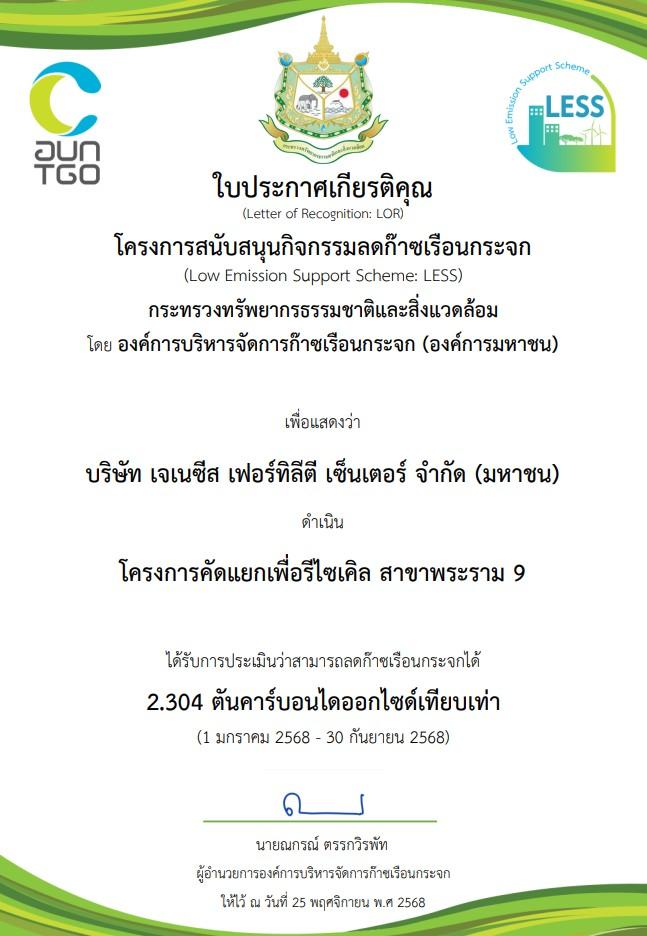
The company received an honorary certificate for the Low Emission Support Scheme (LESS) project from the waste segregation for recycling project at Rama 9 branch, achieving a reduction of 2.304 tons of carbon dioxide equivalent (January 1 – September 30, 2025) from the Thailand Greenhouse Gas Management Organization (Public Organization) or TGO.
GHG — Plan & Guidelines
Has a GHG Management Plan
Yes
Plan Description
The Company recognizes the challenges posed by climate change, which is a significant factor affecting the environment, economy, and human quality of life, both currently and in the future. Therefore, the Company prioritizes environmentally responsible business operations and recognizes the necessity of concrete participation in addressing these issues. The Company has joined the "Greenhouse Gas Management Initiator Organization" of the Thailand Carbon Neutral Network (TCNN), which is a national collaborative network supporting organizations of all sizes to participate in reducing greenhouse gas emissions. This is to enable Thailand to progress towards carbon neutrality and net-zero greenhouse gas emissions in line with national and international goals, robustly and sustainably.
The Company has set a target for net-zero greenhouse gas emissions by 2050 and has prepared an action plan for continuous and systematic reduction of greenhouse gas emissions. A short-term target has been set to reduce Scope 1 and Scope 2 greenhouse gas emissions by 40% by 2030, compared to the base year, and a medium-term target to reduce all three scopes of greenhouse gas emissions (Scope 1, 2, and 3) by 50% by 2045. This is achieved by promoting the participation of employees at all levels, coupled with demonstrating responsibility towards all stakeholder groups, to collectively drive the organization towards sustainable growth.
GHG — Emissions
GHG Emissions
| Metric | Current Year | Previous Year | Two Years Ago |
|---|---|---|---|
| Total GHG emissions (Metric tonnes of carbon dioxide equivalent) | 574 | 281 | 287 |
| Total greenhouse gas emissions 1 (Metric tonnes of carbon dioxide equivalent) | 58 | 7 | 10 |
| Total greenhouse gas emissions 2 (Metric tonnes of carbon dioxide equivalent) | 440 | 176 | 173 |
| Total greenhouse gas emissions 3 (Metric tonnes of carbon dioxide equivalent) | 76 | 98 | 104 |
GHG — Emissions Verification
Emissions Verified by a Third Party
Yes
Verifying Body
2648
GHG — Principles & Standards
Principles & Standards Applied
| Standard |
|---|
| 2677 |
GHG — Targets
Has Set GHG Targets
Yes
GHG Targets — Net Zero
Net Zero Targets
| Emission Scope | Base Year | Base Year Emissions | Near-term Target Year | Near-term Target Change (%) | Long-term Target Year | Long-term Target Change (%) | Target Year | Target Change (%) | Unit | Per Unit (Intensity) | Per Unit — Please Specify |
|---|---|---|---|---|---|---|---|---|---|---|---|
| 2716 | 2,022 | 3.27 | 2,045 | 50 | 2,050 | 0 | 2,045 | 50 | Metric tonnes of carbon dioxide equivalent | Person(employee) | Person(employee) |
GHG — Performance & Outcomes
Has Performance Results
Yes
Performance Description
The company recognizes the challenges posed by climate change, a critical factor impacting the environment, economy, and human quality of life both currently and in the future. Therefore, the company prioritizes conducting business with environmental responsibility and acknowledges the necessity of concrete participation in addressing these issues. The company has joined the "Greenhouse Gas Management Initiator Organization" of the Thailand Carbon Neutral Network (TCNN), a national collaborative network that supports organizations of all sizes in reducing greenhouse gas emissions, to advance Thailand towards carbon neutrality and net-zero greenhouse gas emissions in line with national and international goals, robustly and sustainably.
The company has set a target for Net Zero Emissions by 2050 and has developed an action plan for continuous and systematic greenhouse gas reduction. Short-term targets include a 40% reduction in Scope 1 and Scope 2 greenhouse gas emissions by 2030 compared to the baseline year, and medium-term targets include a 50% reduction across all three scopes (Scope 1, 2, and 3) by 2045. This is achieved by promoting employee participation at all levels, coupled with demonstrating responsibility to all stakeholder groups, to collectively drive the organization towards sustainable growth.
Guidelines
The company will operate in compliance with laws, international standards, and other relevant requirements concerning greenhouse gas emission management.
The company will prepare greenhouse gas emission reports in accordance with international standards or equivalent, covering the company's operational scope, and disclose such information in its annual report.
The company will continuously improve and develop its practices to align with its objectives, context, and environmental impacts from organizational activities, products, and services, particularly concerning greenhouse gas emissions.
The company will periodically monitor and review its objectives, targets, and policies.
The company is committed to environmental protection to mitigate the impacts of climate change by reducing greenhouse gas emissions and preventing pollution from all organizational activities. Greenhouse gas reduction targets are set in alignment with Thailand's national goals.
The company will promote and advocate for efficient resource utilization, including Green Procurement that considers environmental impacts throughout the life cycle of products or services, reducing waste from service processes, and considering impact control to ensure business sustainability.
The company will enhance knowledge to raise awareness of greenhouse gas reduction and disseminate it to all stakeholder groups.
Organizational Carbon Footprint Assessment
The company commenced the assessment of its Carbon Footprint for Organization (CFO) in 2022, covering greenhouse gas emission data from January 1 to December 31, 2022. This data will serve as the baseline year for managing and monitoring the company's greenhouse gas reduction efforts. (The company plans to adjust the baseline year to 2025 due to the addition of the Rama 9 International branch.)
The assessment was conducted according to the international standard ISO 14064-1, with Advanced Energy Plus Co., Ltd. serving as the consultant for report preparation. The greenhouse gas emission data and registration were verified in accordance with the same standard by Bureau Veritas Certification (Thailand) Ltd., an officially accredited body under ISO standards.
in the year In 2025, the company's total greenhouse gas emissions were 574 tonCO2e, comprising Scope 1 at 58 tonCO2e, Scope 2 at 440 tonCO2e, and Scope 3 at 76 tonCO2e.
Measures implemented by the group of companies include:
Establish specific times for turning electricity on and off within the organization.
Reduce the use of single-use plastics and promote the use of personal containers.
Sustainable waste management (BRADAY project: "Old Bars, We Want Them," and recycling waste transfer in collaboration with WASTE BUY Delivery).
Promote travel by public transportation, carpooling activities, employee shuttle vans, and electric golf carts for employee transport.
Reduce paper usage; print documents only when necessary.
Select products and goods with environmental labels.
From the company's greenhouse gas reduction measures in 2025, it can absorb 2,444 KgCO2e of greenhouse gas emissions from various activities, equivalent to planting 272 trees.
Environmental Legal Incidents
Legal Violation Incidents
| Metric | Current Year | Previous Year | Two Years Ago |
|---|---|---|---|
| Number of cases or incidents of legal violations or negative environmental impact (cases) | 0 | 0 | 0 |
Other Environmental Management
Plan Description
Resource Reduction (Paper)
The Company prioritizes resource reduction, especially paper usage, by applying digital transformation technologies in its work processes to minimize unnecessary document printing and continuously promote the use of electronic systems to replace traditional paper documents.
For documents that require paper, the Company has switched to environmentally friendly paper, which contains 50% recycled pulp and has received the Thai Green Label certification from the Thailand Environment Institute. In 2025, the Company was able to reduce paper consumption by 0.54% compared to 2024. Although the performance did not meet the set target, this was a result of business expansion and the opening of a new branch, "Rama 9 International." Nevertheless, the Company remains committed to continuously improving paper usage efficiency alongside business expansion, reflecting its dedication to environmentally responsible business operations and sustainable resource utilization in the long term.
A network member of environmental projects of the Stock Exchange of Thailand. Climate Care Collaboration Platform
The Company has joined as a network member of environmental projects of the Stock Exchange of Thailand. Climate Care Collaboration Platform to support climate change operations and efficient resource utilization.
Care The Bear is a platform for recording data on greenhouse gas emission reductions from activities in the form of online and onsite activities such as training, seminars, meetings, and CSR activities, etc. This promotes behavioral change by designing based on the 6 Cares principles to evaluate, measure, and create new behaviors for the organization.
Care The Whale The Company participates in the “ Care the Whale,” which aligns with the Company's environmental policy for sustainable and academically sound management of all types of waste. The aim is to reduce general waste and increase the proportion of waste entering the recycling process, consistent with the Company's long-term plan to achieve Zero Waste to Landfill. Furthermore, the Company is one of 40 member organizations of the "Invisible Glass Bottle Waste" project, which collectively manages glass bottle waste sustainably.
In 2025, the Company joined this project and is currently preparing and adjusting its internal data systems to align with data recording through the relevant platform. It is expected that in 2026, the Company will be able to systematically and more efficiently record and analyze data, and develop plans to reduce resource consumption and environmental impacts.
Organizational culture and organizational growth while maintaining a comprehensive environmental balance.
The Company continuously emphasizes raising environmental awareness within the organization through various communication channels to encourage employees at all levels to gain knowledge, understanding, and participate concretely in driving sustainability goals. The Company focuses on personnel development by conducting training programs and environmental conservation knowledge activities to enhance understanding of the impacts of operational activities on the environment, as well as effective approaches to mitigate and prevent such impacts.
Furthermore, the Company promotes and supports employees in applying their knowledge both at work and in daily life through participation in greenhouse gas reduction activities, such as efficient energy and resource utilization, proper waste segregation and management, and choosing environmentally friendly transportation methods. These approaches not only enhance employees' environmental knowledge and awareness but also play a crucial role in building a strong organizational culture, supporting the well-being of personnel, and driving business growth alongside long-term sustainable development.
In 2025, the Company collected and analyzed data on electricity, water, all types of waste, and greenhouse gas emissions to assess potential trends and impacts of the Company's operations on society and the environment. Guidelines were established to improve and maximize resource utilization efficiency, reduce waste, comprehensively mitigate social and environmental impacts, and systematically monitor and evaluate resource usage to ensure that organizational growth aligns with sustainable development guidelines.
Employees — Plan & Guidelines
Has an Employee Management Plan
Yes
Plan Description
Employees and Labor
The company is committed to serious human resource management, adhering to relevant labor laws and regulations, as well as international human rights principles, to care for employees based on equality, fairness, and justice, as follows:
Treats employees and stakeholders according to internationally recognized human rights principles. including labor laws and relevant labor standards.
Maintain and promote an open organizational culture. by encouraging employees to participate, express opinions, and suggest organizational development guidelines.
Company Human Resource Management Policy has been developed to align with international best practices, covering key issues such as:
1. Fair Employment/Termination
The group of companies prioritizes fair employment and strictly adheres to labor laws to ensure all employees receive appropriate care. There are transparent standards for selecting and appointing employees, considering qualifications, abilities, and experience, free from discrimination based on race, religion, gender, age, disability, or political views.
Termination of employment follows clear, transparent, and fair criteria, based on performance and legal requirements.
Terminated employees receive legal severance pay, including appropriate advance notice.
2. Employee Compensation and Benefits
The group of companies establishes fair compensation policies, aligned with industry standards and labor laws, taking into account employees' abilities, performance, and experience.
Compensation and benefits are regularly reviewed to keep pace with economic conditions.
Has a policy to support fair and equitable compensation, without discrimination.
Promotes employee stability and work motivation.
Establish appropriate and fair compensation and benefits.
- Supports employees in developing skills and growing within the organization.
- Uses transparent and standardized evaluation guidelines.
- Provides welfare benefits that promote quality of life.
- Annual bonus
- Provident fund
- Inpatient and outpatient medical expense insurance.
- Accident insurance
- Occasional financial assistance, such as for employee and family funerals.
-Get-well gifts for sick employees
-Financial support for company activities, such as annual trips and New Year's parties.
-Special discounts on company product purchases.
-Annual health check-up
-Employee uniforms
- Leave and holiday entitlements as prescribed by law.
- Birthday leave entitlement
Employee shuttle service
The company has a policy of providing fair compensation and benefits comparable to organizations in the same business, linked to the performance of each executive and employee. The compensation structure is reviewed annually to ensure employee compensation is at a highly competitive level ( Top Quartile) in related industries.
The company has established compensation management guidelines, taking into account the impacts of internal and external environmental changes, as well as labor market trends, to ensure that compensation is fair and aligned with the company's business objectives. Compensation is determined for all executives and employees. 1 Times / Year by using performance indicators ( KPI) is a key criterion.
The company adopts the principle of Balance Scorecard and emphasizes performance in 3 Key dimensions include:
Continuous Operations Perspective ( Business as Usual)
Key Strategic Project Perspective ( Strategic Initiatives)
Organizational Strategy Support Perspective ( Strategic Enablers & Sustainability
The establishment of Corporate Key Performance Indicators (KPIs) and their translation into Individual KPIs, covering both current (short-term) performance and long-term strategic performance, ensures that executive and employee compensation aligns with both short-term and long-term performance and strategies.
Item | Unit | Year 2023 | Year 2024 | Year 2025 |
Total compensation for all employees. | Million Baht | 31.23 | 72.30 | 76.18 |
Total compensation for male employees. | Million Baht | 4.64 | 9.43 | 15.32 |
Total compensation for female employees. | Million Baht | 26.59 | 62.87 | 60.86 |
Average compensation of female employees to male employees. | - | 82.54 | 85.00 | 93.15 |
3. Employee Potential Development and Skill Enhancement
The group of companies is committed to continuous human resource development to enhance employees' potential and growth opportunities.
Provides both internal and external training, including specialized courses related to job positions.
Supports learning through digital platforms, further education, or vocational training.
Has a transparent employee evaluation system to guide skill development.
Provides opportunities for employees to grow within the organization, based on performance, abilities, and potential.
Foster an organizational culture conducive to collaboration and development.
Providing safety knowledge training for new employees.
The company prioritizes safety, health, and the working environment to enable employees to perform their duties efficiently and safely. Safety knowledge training is provided for new employees, covering safety standards, relevant laws, and practices to reduce workplace risks. In 2025, the number of new employees who completed the training was 41 persons
The company has continuously designed and improved training courses to meet the organization's short-term and long-term goals and directions, and to develop the knowledge, skills, and experience of personnel, providing specialized knowledge, technical knowledge, management knowledge, and knowledge to support new businesses in the future. Additionally, the company emphasizes actions related to human rights respect, such as the Labor Protection Act B.E. 2551 (Revised Edition) Section 11/1, as well as supporting labor policies and laws for employees, and promoting seminars and study visits to allow employees to exchange knowledge and experience with other organizations and apply them to develop the organization.
In 2025, the company provided a total of 2,509 training hours for employees, averaging 24 training hours per person per year. The diverse training courses covered essential skills such as anti-corruption and anti-bribery policies. , Basic safety training , Energy efficiency improvement , Procedures for managing labor law requirements. , Risk assessment in the product manufacturing process , Occupational safety, health, and working environment, and business sustainability fundamentals, etc.
In 2025, the company encouraged employees at all levels to participate in the training program ESG DNA which is a sustainability course organized by the Stock Exchange of Thailand to enhance knowledge and understanding of sustainable business practices. Employees participating in the program received training according to the Stock Exchange's criteria and were awarded certificates of participation, reflecting the organization's commitment to developing and instilling concepts related to ESG to be part of the organizational culture.
4. Policy on Maintaining a Safe and Hygienic Working Environment
The group of companies prioritizes a safe working environment, with occupational health and safety measures that comply with legal requirements.
Regularly provides safety training for employees at all levels.
Has measures to prevent workplace accidents, including inspecting equipment and tools to meet standards.
Encourages all employees to participate in reporting and alerting safety risks.
Provides first aid units and emergency notification channels.
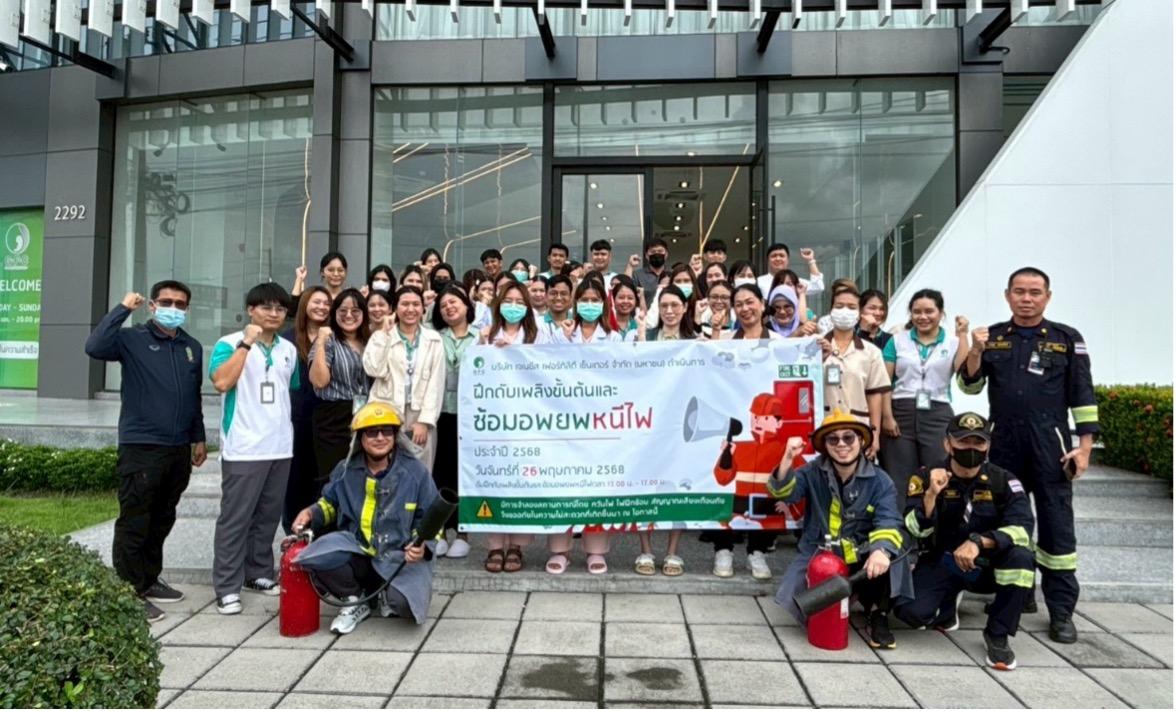
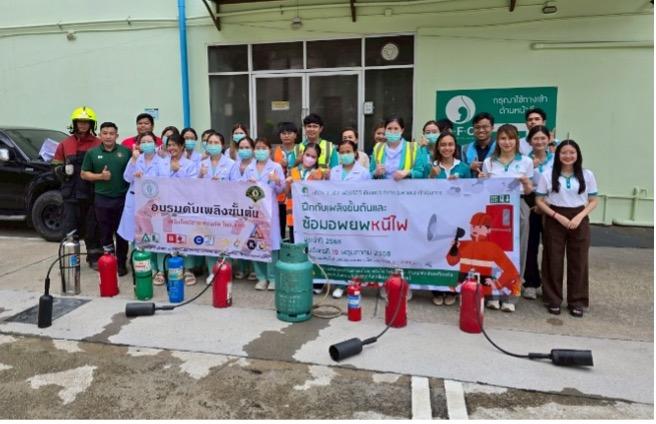
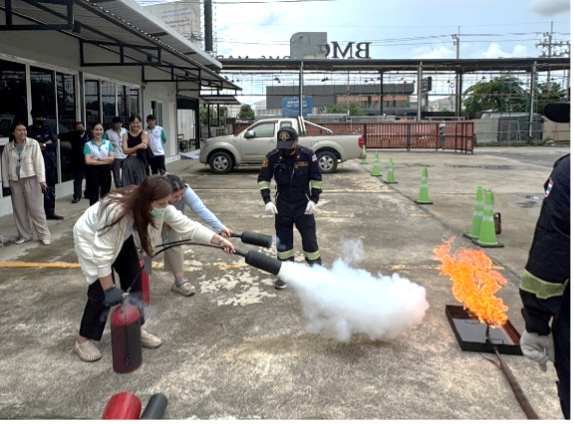
The company conducted fire drills and evacuation exercises on May 19, 26, 2025.
with 65 head office employees and 45 Rama 3 branch employees participating, totaling 100. % of all employees. This drill was organized to enhance readiness for emergency situations, reduce potential risks, and improve employees' skills to follow evacuation plans correctly and safely.
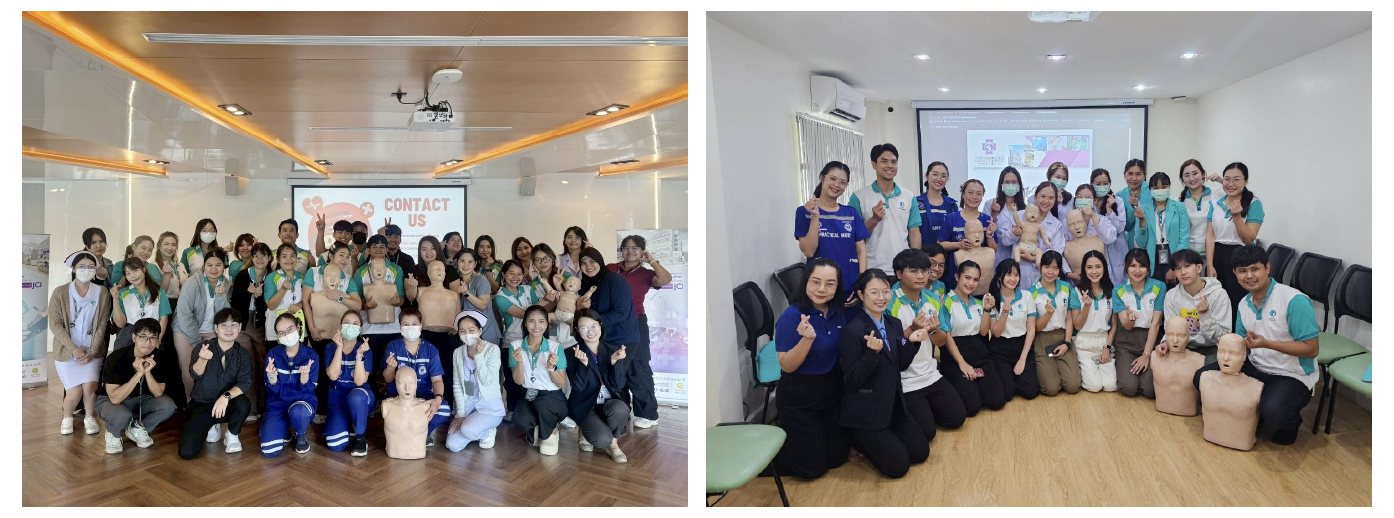
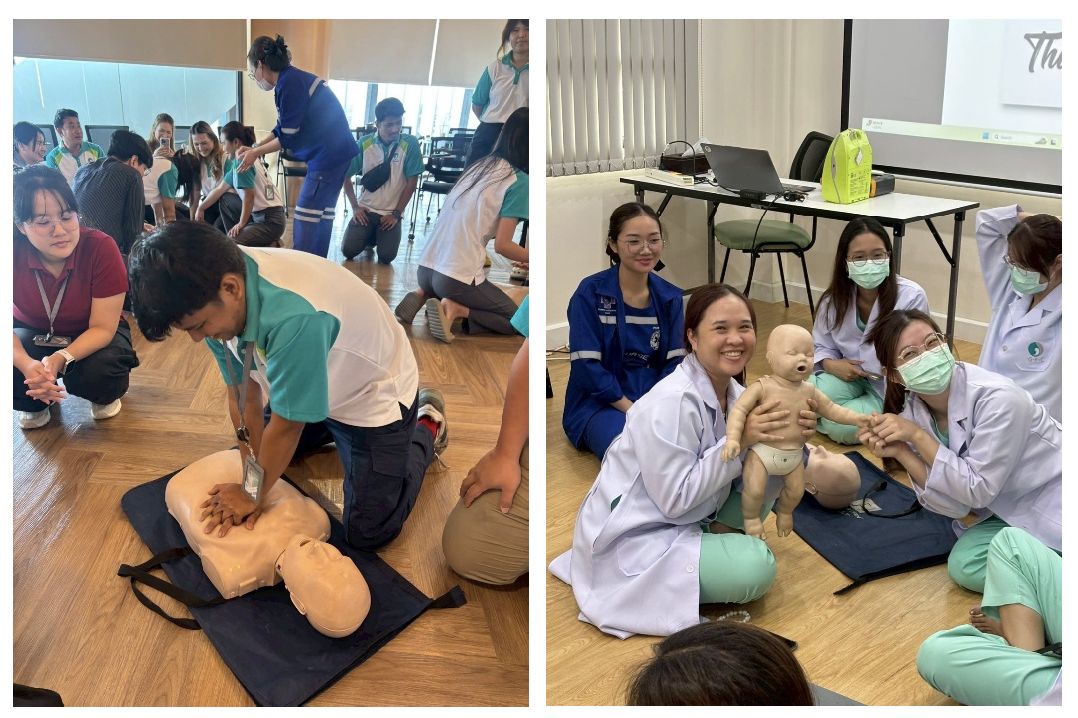
Basic First Aid and CPR Training Course
The company organizes First Aid & CPR Training courses to equip employees with the knowledge and skills to assist injured or unconscious individuals in emergencies. This enables them to perform initial aid correctly and promptly, with practical training and simulated scenarios to ensure employees understand and can apply the skills effectively.
Safety inspection in healthcare facility operational areas.
Healthcare facilities continuously monitor and track safety, occupational health, and environmental performance within the facilities to ensure that medical operations and healthcare services comply with established safety standards.
Work-related accidents
Indicator | Unit | Target | 2023 | 2024 | 2025 |
Number of lost-time work-related illnesses. | persons | 0 | 0 | 0 | 0 |
Number of lost-time work injuries. | persons | 0 | 0 | 0 | 0 |
Number of work-related fatalities | persons | 0 | 0 | 0 | 0 |
Lost Time Injury Frequency Rate (LTIFR) | Number of cases per 200,000 working hours | 0 | 0 | 0 | 0 |
Note: The Loss Time Injury Frequency Rate (LTIFR) is calculated by dividing the number of lost-time injuries by the total number of working hours, then multiplying by 200,000 to obtain a comparable rate across industries.
5. Welfare Committee
Welfare is a crucial factor that improves the quality of life for employees and their families. Modern and employee-needs-aligned welfare management helps employees access accurate information about available benefits within the organization, balance work and life, foster value and dedication to the company, and prevent and eliminate organizational problems that hinder operations.
In 2025, the group of companies established a Welfare Committee within the establishment to play a crucial role in overseeing and regulating employee-related welfare. The focus is on developing welfare management guidelines that align with the organizational environment. In the past year, the company prioritized improving welfare programs to suit employees and enhance their quality of life, as well as implementing programs appropriate for the economic situation.
6. Equal Opportunities for Underprivileged Groups and Persons with Disabilities
The company recognizes the importance of improving the quality of life for persons with disabilities and considers it a way to promote opportunities for them to demonstrate their abilities, generate income, become self-reliant, and reduce the burden on families and society for long-term care. It also encourages persons with disabilities to be a mechanism in promoting the country's business development, especially regarding quality of life within the occupational health group, in accordance with the Promotion and Development of Quality of Life for Persons with Disabilities Act B.E. 2550 aims to promote and protect persons with disabilities, with practices to establish important measures regarding occupational promotion and stable income for caregivers of persons with disabilities. The Promotion and Development of Quality of Life for Persons with Disabilities Act B.E. 2550 and amendments. In both public and private sectors, there are provisions for promoting occupations according to the proportion of 35 persons per 1 persons, where the industrial business sector must meet the required ratio of 1 per 100 persons
in B.E. 2025 The company has employed a number of disabled persons. 1 persons in the position of Accounting Administrative Officer, in accordance with the provisions of the Promotion and Development of Quality of Life for Persons with Disabilities Act B.E. 2550 and amendments. based on principles of equality, non-discrimination, and providing appropriate employment access for persons with disabilities according to their individual potential.
The company has prepared a working environment and assigned responsibilities that align with the job nature and abilities of persons with disabilities, while providing necessary support to enable them to perform effectively. This promotes vocational skill development and career advancement, thereby enhancing their quality of life and creating sustainable career stability.
Furthermore, the company remains committed to implementing sustainable human resource management policies by supporting diversity, equality, and inclusion to foster an open organizational culture that respects differences and promotes long-term sustainable growth.
7. Salary Adjustment Criteria
The group of companies has fair salary adjustment criteria, taking into account employee capabilities and company performance.
of the organization.
Consideration of salary adjustments based on employee performance and annual evaluations.
Considers economic and industry conditions to ensure employees receive appropriate compensation.
Establishes clear evaluation guidelines to ensure transparency and fairness.
Promotes incentive systems, such as bonuses.
8. Provident Fund
The group of companies provides a provident fund to serve as financial security and promote employees' saving discipline.
The company contributes funds at an appropriate rate.
Provides advice on fund savings and investments to enable employees to manage their savings effectively.
Promotes financial and retirement planning knowledge among employees.
Allows employees to voluntarily contribute to the fund, ranging from 3-15%.
Unit | Year 2023 | Year 2024 | Year 2025 | |
Employee compensation payment | ||||
Total compensation for employees. | Million Baht | 31 . 23 | 72.30 | 79.19 |
Amount contributed to the provident fund. | Million Baht | 0. 3 | 0.94 | 1.15 |
Percentage contributed by the company. | Percentage | 3 | 3 | 3 |
Percentage of employees choosing to contribute. | Percentage | 3 | 3 | 3-15 |
Number of employees who are provident fund members. | persons | 65 | 80 | 103 |
Percentage of employees who are provident fund members. | Percentage | 87.84 | 89.96 | 91.15 |
Average knowledge training hours per employee. | Hrs/person/year | 14.00 | 19.26 | 24 |
Training expenses / for employee development | Million Baht | 0.09 | 0.42 | 0.32 |
9. Employee Engagement Assessment
Employee Engagement Assessment Guidelines
The company assesses employee engagement levels through Employee Engagement Survey along with the use of structural human resource indicators, namely turnover rate ( Employee Turnover Rate) and employee retention rate ( Employee Retention Rate) to reflect workforce stability and quality of working life, in accordance with practices in ESG and international human capital reporting.
Evaluation Results and Comparison 2024 – 2025
Year B.E. 2024
The company has an average of approximately 84.25 employees, with an average total turnover rate of 2.38%, which is due to the resignation of probationary employees, accounting for 1.18%. Permanent employees accounted for 1.30%. Meanwhile, the average annual employee retention rate for permanent staff was 98.70%, reflecting a good level of workforce stability, even though the organization is still in a period of expansion and partial personnel restructuring. When considering by job type, it was found that the turnover rate of Group Front Clinic was 0.60%. Group Front Non-Clinic was 0.68%. Group Back Office was 1.10%. which is still at a level that the organization can manage without affecting service quality.
Year B.E. 2025
The company found that employee engagement levels showed a continuous upward trend, based on evaluation results from Employee Engagement Survey was 78.01%, an increase from 75.68% in 2024, and significantly higher than the organizational target of 70%. Structurally, the company has an average total turnover rate of 2.89% and an average annual employee retention rate as high as 98.50%, reflecting workforce continuity and the organization's ability to retain high-potential personnel in the long term. A comparison of data between 2024 and 2025 shows that despite increasing business environment challenges and competition for specialized personnel, the company has continuously maintained human resource stability while enhancing employee engagement qualitatively.
Factors related to ESG that support employee engagement.
Safe, fair, and quality-of-life-conscious working environment ( Well-being & Decent Work) The company prioritizes the safety, health, and well-being of its employees to create a sustainable working environment.
Human Capital Development and Career Advancement ( Human Capital Development)
The company supports learning, skill development, and career growth, especially for medical personnel and specialized professionals.
Employee-Centric Participation and Leadership ( Inclusive & Participative Leadership)
Management prioritizes transparent communication, listening to feedback, and employee participation to build long-term trust and engagement.
In summary, the company shows a strong and continuously developing employee engagement trend from 2024 to 2025, both in terms of workforce structure and quality based on engagement survey results. The company will continue to implement human resource strategies within the framework of ESG continuously, to create shared value for employees, service recipients, shareholders, and society sustainably.
Factors affecting employee engagement
1. Working Environment
GFC focuses on creating a friendly work environment, supporting teamwork, and providing opportunities for employees to express creative ideas. We believe that a good environment helps employees feel confident and happy at work.
2. Career Development Opportunities
We support employees in continuously developing their skills and abilities through workshops, internal and external training, and career development programs that help employees grow in their respective fields.
3. Management Support
Organizational leaders play a crucial role in building employee trust. GFC emphasizes open communication and management support to make employees feel involved and valued.
Target details | Target | Performance |
Employee Satisfaction | 70% | 78% |
Number of employee knowledge and skill development trainings. | 16 hours / person / year | 24 hours / person / year |
Employee turnover rate | 5% | 2.89% |
Human Rights Violations / Violations against Key Stakeholders of the Company | 0 | 1 |
Accident rate for employees and related parties. | 0 | 0 |
Develop personnel and scientists to advance fertility treatment through GFC Connect activities. | 1 time/year | 1 time/year |
Supports the well-being of communities near the company. | 1 community | 1 community |
Projects that help communities and society, carried out in collaboration with partners. | 5 projects | 5 projects |
Plan Areas
| Plan Area |
|---|
| Fair employee compensation |
| Employee training and development |
| Promoting employee relations and participation |
Employees — Workforce
Workforce Data
| Metric | Current Year | Previous Year | Two Years Ago |
|---|---|---|---|
| Total number of employees (Persons) | 111 | 102 | 97 |
| Number of male employees (Persons) | 21 | 11 | 11 |
| Number of female employees (Persons) | 90 | 91 | 86 |
| Total employment of disabled persons (people) | 1 | 0 | 0 |
| Total disabled employees (people) | 1 | 0 | 0 |
| Total male disabled employees (people) | 0 | 0 | 0 |
| Total female disabled employees (people) | 1 | 0 | 0 |
| Total disabled workers who are non-employee (people) | 0 | 0 | 0 |
| Contributions to the fund for promoting and improving the quality of life for disabled persons | 0 | 0 | 0 |
| Total number of male employees in operational level (Persons) | |||
| Total number of male employees in management level (Persons) | |||
| Total number of male employees in executive level (Persons) | |||
| Total number of female employees in operational level (Persons) | |||
| Total number of female employees in management level (Persons) | |||
| Total number of female employees in executive level (Persons) |
Employees — Remuneration & Provident Fund
Remuneration & Provident Fund
| Metric | Current Year | Previous Year | Two Years Ago |
|---|---|---|---|
| Total disabled employees (people) | 76,186,619.49 | 72,300,000 | 31,230,000 |
| Total male employee remuneration (Baht) | 15,325,329.06 | 9,430,000 | 4,640,000 |
| Total female employee remuneration (Baht) | 60,861,290.43 | 62,870,000 | 26,590,000 |
| Number of employees eligible to participate in PVD (persons) | 103 | 80 | 65 |
| Total number of employees joining employee provident fund (Persons) | 103 | 80 | 74 |
| Percentage of total number of employees joining employee provident fund to total number of employees (%) | 92.79 | 78.43 | 76.29 |
| Number of PVD members / Total eligible employees (%) | 100 | 100 | 113.85 |
| Total amount of provident fund contributed by the Company (Baht) | 2,258,446.36 | 1,882,348.5 | 730,000 |
| Total amount of provident fund contributed by employee (baht) | 2,514,154.36 | 1,882,348.5 | 730,000 |
Employees — Training & Development
Training Data
| Metric | Current Year | Previous Year | Two Years Ago |
|---|---|---|---|
| Average employee training hours (Hours / Person / Year) | 24 | 19.26 | 14 |
| Employee development and training expenses (baht) | 3,249,400 | 434,556.39 | 96,842.5 |
Employees — Occupational Health & Safety
Occupational Health & Safety Data
| Metric | Current Year | Previous Year | Two Years Ago |
|---|---|---|---|
| Total number of lost time injury incidents by employees (Cases) | 0 | 0 | 0 |
Employees — Labour Relations
Labour Relations Data
| Metric | Current Year | Previous Year | Two Years Ago |
|---|---|---|---|
| Total voluntary resignations (Persons) | 38 | 30 | |
| Male employees who voluntary resigned (Persons) | 9 | 7 | |
| Female employees who voluntary resigned (Persons) | 29 | 23 | |
| Percentage of employee turnover leaving the Company voluntarily (%) | 34.23 | 29.41 | 2.38 |
| Evaluation result of employee engagement | 1 | 1 | 1 |
Employees — Employee Representation
Employees Are Represented Collectively
Yes
Forms of Representation
| Form |
|---|
| Welfare committee |
Employees — Targets
Has Set Employee Targets
Yes
Targets
| Indicator | Target Areas | Base Year | Target Year | Target Year — Description |
|---|---|---|---|---|
| Employee Satisfaction | 2985 · Description: Promoting employee relations and participation | 2,025 | 2,026 | The employee satisfaction level with the organization must be at least 70%. |
Employees — Performance & Outcomes
Has Performance Results
Yes
Performance Description
Employee Skill Development Project in Assisted Reproductive Technology
Knowledge Transfer in Assisted Reproductive Technology
The company continuously transfers knowledge and expertise in assisted reproductive technology to various agencies, organizations, and higher education institutions under the project " GFC Connect," while also promoting the exchange of knowledge and experience with partner networks to elevate the standard of infertility treatment and support the sustainable development of best practices in the assisted reproductive technology industry.
In 2025, the company sent personnel to deliver special lectures at various universities as follows:
University | Lecture Topics | Number of Participants |
Thammasat University | Laboratory semen analysis technology and career paths in ART. | 89 |
Thammasat University | How to become a medical technologist in an infertility clinic: essential potential, responsibility to oneself and the profession, academic and professional integrity, flexible thinking, and growth. | 78 |
Additionally, the company organized educational activities at GFC Rama 9 International under the "GFC Connect" project to provide students interested in embryology and assisted reproductive technology with real-world experience working in the ART LAB of Genesis Fertility Center (GFC). Students will learn about important operational processes such as ICSI preparation, sperm preparation for ICSI, semen analysis, embryo culture, and high-quality embryo selection, among others.
Students also gained opportunities for practical work experience under the close supervision of experts, which helped enhance their skills, practical understanding, and readiness for future professional careers. All participants expressed interest in further developing a career path in this field, accounting for 100%, reflecting the company's role in supporting the development of quality human resources and sustainably elevating industry standards. In 2025, students interested in participating in activities were as follows:
University | Number of Participants |
Mahidol University | 15 |
Project “GFC Connect” benefits the company and society in various aspects.
Short-term Benefits
Promoting Learning from Real-world Experience Students gained practical experience in a real-world environment, learning important procedures such as in vitro fertilization ( Sperm preparation, semen analysis, and quality embryo selection, which help foster deep understanding and build essential professional skills for the future.
Inspiring Interest in Specialized Professions Participating Students Workshop participants have the opportunity to discover their aptitudes and interests in specialized medical fields, which could lead to developing stable careers that meet future societal needs.
Connecting Academia and the Private Sector Collaboration between universities and establishments facilitates concrete knowledge and experience exchange, which will lead to the development of curricula that better align with labor market demands.
Long-term Benefits
Developing Quality Personnel in Assisted Reproductive Technology Thailand still faces a shortage of specialized experts. This project is therefore crucial in developing new generations of personnel with knowledge, skills, and readiness to enter the labor market.
Supporting the Resolution of Infertility Issues in Thailand By transferring knowledge and developing skills in reproductive medicine, this project will help increase public access to quality treatment, which will have long-term positive effects on the population structure.
Promoting Research and Innovation Development in Assisted Reproductive Technology Providing students with real-world work experience stimulates new ideas that can be further developed into future research and innovations.
Elevating Professional Standards in the Country Training and developing personnel under the guidance of highly experienced experts will help establish new standards for teaching and learning.
Promoting Professional Skill Development
The 3 1 st Congress of the Thai Society for Reproductive Medicine (TSRM 2025)
The medical team and scientists attended The 3 1 st Congress of the Thai Society for Reproductive Medicine (TSRM 2025), a national academic conference on reproductive medicine, organized as a platform for presenting and exchanging academic knowledge, research, innovations, and modern treatment approaches in reproductive medicine and Assisted Reproductive Technology (ART). Physicians, scientists, researchers, and medical personnel from various fields participated to collectively elevate the standards of infertility treatment and continuously improve the quality of patient care.
GFC Meet The Experts
Company personnel attended lectures to enhance and develop academic knowledge on key topics, including:
Now & Future of Artificial Intelligence in IVF Laboratory, Increasing Success Rate
LH evidence based clinical practice trend & RWEs
Unlock the power of Preimplantation Genetic Testing
Honored by Asst. Prof. Dr. Chanakan Sibutkul and Lecturer Dr. Pantavee Tantiviriyaphan, faculty members of the Reproductive Biology Unit, Department of Obstetrics and Gynecology, Faculty of Medicine, Chulalongkorn University. These lectures contributed to enhancing the knowledge, understanding, and potential of personnel in applying modern medical technologies and practices, thereby increasing the efficiency of quality and standardized patient care.
SPIRE2025 (The Congress of the Asia Pacific Initiative on Reproduction)
The medical team participated in the international academic conference ASPIRE2025 (The Congress of the Asia Pacific Initiative on Reproduction) at Suntec Convention & Exhibition Centre, Singapore. This international academic conference on reproductive medicine in the Asia Pacific region was organized to exchange knowledge, research, innovations, and best practices related to infertility treatment and Assisted Reproductive Technology (ART), with experts and medical personnel from various countries attending.
ESHERE 5 th Annual meeting
The company participated in the ESHRE 5 conference. th Annual Meeting, which is one of the most important international academic platforms in assisted reproductive technology. This event gathers experts, scientists, and physicians from around the world to exchange knowledge, innovations, and the latest treatment approaches in reproductive medicine. Participating in this conference is a significant opportunity for the company's medical team and scientists to update their in-depth knowledge of new technologies in infertility care and treatment, as well as to develop best practices for embryo culture laboratories. The company also exchanged experiences with experts from various countries to further advance the standards of reproductive medicine services. Participation in ESHRE 5 th Annual Meeting underscores the company's commitment to improving treatment quality by utilizing modern technology and innovation to provide the best opportunities for those seeking to have children, while moving forward to become a leading international reproductive medicine center.
Driving Excellence in IVF
Company personnel attended the "Driving Excellence in IVF" lectures on "Quality Control in IVF Laboratory" and "Enhancing the Role and Benefits of LH in Ovarian Stimulation: Evidence-Based Insights and Cost-Effectiveness." The lectures were honored by Prof. Dr. Teeraporn Vutyavanich, a specialist in Obstetrics and Gynecology, Reproductive Medicine, and Assoc. Prof. Dr. Pitak Laohapornpitak, a specialist in Obstetrics and Gynecology, Reproductive Medicine, who are executives and resident physicians at GFC Clinic. These sessions enhanced in-depth understanding and supported the application of standardized treatment guidelines in patient care. The lectures reflect the company's commitment to continuous learning, systematic professional knowledge development, and operating business on principles of good governance to elevate the quality of treatment and create sustainable value for all stakeholders.
Customers — Plan & Guidelines
Has a Customer Management Plan
Yes
Plan Description
In customer satisfaction surveys, the Company prioritizes enhancing the quality of services and the experience of service recipients. Customer satisfaction surveys are conducted annually, and the evaluation results are analyzed to determine continuous improvement and development guidelines for services.
The Company has designed a questionnaire to cover key issues in evaluating the effectiveness of its services, taking into account the specific characteristics of recipients of reproductive medicine services, who have diverse needs and service experiences, to ensure that the survey results comprehensively reflect the opinions of service recipients.
The topics for customer satisfaction evaluation cover the following key issues:
Quality of medical services and care.
Attentiveness and communication of doctors and medical personnel.
Convenience and duration of service access.
Clarity and completeness of information and advice.
Standards of cleanliness, safety, and the environment of the medical facility.
Efficiency of staff services and facilitation.
Overall satisfaction and intention to return for services or recommend to others (Customer Loyalty).
In 2025, the average customer satisfaction level for the Rama 9 branch was 97%, and for the Rama 3 branch, it was 98.42%. The Company utilizes these survey results to continuously improve service processes, develop personnel capabilities, and elevate operational standards to build maximum confidence and satisfaction among service recipients.
Plan Areas
| Plan Area |
|---|
| Responsible production and services for customers |
| Development of customer satisfaction and customer relationship |
| Protection of customer personal information |
Customers — Satisfaction Results
Customer Satisfaction Results
| Metric | Current Year | Previous Year | Two Years Ago |
|---|---|---|---|
| Evaluation results of customer satisfaction | 1 | 1 | 1 |
Customers — Targets
Has Set Customer Targets
No
Customers — Performance & Outcomes
Has Performance Results
No
Performance Description
The Company places importance on continuously enhancing service quality and customer experience. To this end, the Company conducts customer satisfaction surveys on an annual basis and analyzes the results to identify areas for improvement and to further develop its services in alignment with customer needs.
The survey questionnaire is carefully designed to cover key aspects of service effectiveness, taking into account the specific characteristics of patients in the field of reproductive medicine, who have diverse needs and service experiences. This ensures that the survey results comprehensively reflect customer perspectives.
The key areas of customer satisfaction assessment include:
Quality of medical services and treatment
Care, attentiveness, and communication of physicians and medical personnel
Convenience and waiting time for services
Clarity and completeness of information and guidance provided
Cleanliness, safety, and environment of the healthcare facility
Efficiency of staff services and facilitation
Overall satisfaction and intention to revisit or recommend the services (Customer Loyalty)
In 2025, the average customer satisfaction score at the Rama 9 branch was 97%, while the Rama 3 branch achieved 98.42%. The Company utilizes these survey results to improve service processes, enhance personnel capabilities, and continuously elevate operational standards, with the aim of building trust and maximizing customer satisfaction.
Community & Social — Plan & Guidelines
Has a Community & Social Plan
Yes
Plan Description
Community and Social Activities
The Company places strong emphasis on comprehensive community and social development through active participation and continuous support of annual activities, as well as initiatives aimed at assisting and developing surrounding communities. These efforts are intended to strengthen positive relationships between the Company and nearby communities, while also providing support during emergency situations, such as assisting individuals affected by flooding in the northern and southern regions, and promoting educational opportunities for underprivileged children and youth.
The Company also participated in the Suan Luang District Community Committee Meeting No. 8/2025 to introduce the Company and communicate its past social and environmental initiatives to the community. During the meeting, the Company reaffirmed its commitment to being an active contributor to community development in the Suan Luang area, where GFC Rama 9 International Branch is located.
In addition, the Company conducted a community field survey and data collection on the quality of life of residents in the Hua Mak Koh Klang Community, Suan Luang District, to support the planning and implementation of community development projects aligned with the actual needs of the community. The visit was led by the community leader, who provided local insights and information. The survey identified key community challenges, including drug-related issues as the most urgent concern, followed by deteriorating housing conditions and income-related challenges.
Based on these findings, the Company has established initial development initiatives, such as allocating proceeds from recyclable waste sales at GFC Rama 9 International Branch to support persons with disabilities in the community, organizing educational activities on sexual health and hygiene, and promoting well-being through initiatives such as “GFC On Tour.” The Company also aims to promote local employment and is considering the establishment of a community vocational training center in collaboration with the Suan Luang District Office, to enhance economic opportunities and improve quality of life in a sustainable manner.
The Company believes that growing alongside the community and society in a mutually supportive manner is a fundamental pillar of sustainable development, and remains committed to continuously fostering strong relationships as a responsible and caring neighbor.
Project to Promote Parenthood in Collaboration with Partners
The Company participated as a guest lecturer in the academic event Beyond ONE-SIZE-FITS-ALL: The ART of Personalized COS on the topic “Trust Matters with True Individualization: Case Sharing,” with the honor of Dr. Parawan Tangtham representing the Company to share experiences and exchange knowledge with international speakers, including Prof. Human M. Fatemi from Abu Dhabi, UAE, and Assoc. Prof. Isarin Thababoonyawat. Prof. Teraporn Vutyavanich graciously served as the moderator for the event to facilitate in-depth discussions.
This lecture focuses on presenting concepts and case studies in infertility treatment using a personalized care approach ( Personalized Treatment), emphasizing building confidence, appropriateness of treatment planning, and selecting technology that aligns with the unique characteristics of each patient, to enhance treatment efficacy and sustainable medical outcomes. This involves transferring knowledge to reproductive medicine specialists nationwide.
Additionally, Dr. Boonyakiart Thammaset served as a Company representative and guest lecturer at the event Alpha Skills Summit 2025 on the topic "Modern Family Planning with Medical Innovation for Confident Parenthood." The objective is to impart knowledge on family planning in the context of modern society, as well as to present approaches and medical innovations in reproductive medicine that enhance understanding and provide suitable options for having children. The lecture aims to provide accurate information, covering health aspects, family preparedness, and the application of modern medical technology to promote parenthood and support effective family planning, in line with the diverse lifestyles and needs of contemporary families.
Plan Areas
| Plan Area |
|---|
| Employment and professional skill development |
| Occupational health, safety, health, and quality of life |
| Disadvantaged and vulnerable groups |
Community & Social — Targets
Has Set Community & Social Targets
Yes
Targets
| Indicator | Target Areas | Target Year | Target Year — Description |
|---|---|---|---|
| Five community and social assistance projects undertaken in collaboration with partners. | 3036 · Description: Employment and professional skill development · 3041 · Description: Occupational health, safety, health, and quality of life · 3044 · Description: Reducing inequality | 2,025 | Five community and social assistance projects undertaken in collaboration with partners. |
Community & Social — Performance & Outcomes
Has Performance Results
Yes
Performance Description
Community and Social Development Project: Enhancing Quality of Life Sustainably
"Pankan" Project "
The Company, in collaboration with the "Pankan" project under the Yuwaphat Foundation, shared educational opportunities with underprivileged children at the foundation through "sharing good-condition items" from executives and employees, such as bags, shoes, clothes, children's toys, and sports equipment. This sharing initiative was converted into 3 scholarships (7,000 Baht each), tangibly supporting the learning and fostering a secure future for the children. This reflects the power of collaboration within the organization in driving a sustainable giving society.
Project "BRADAY Old Bras, We Want Them"
The Company, in collaboration with the "BRADAY Old Bras, We Want Them" project under Thai Wacoal Public Company Limited, established collection points for old and worn-out underwear for both men and women. This initiative aims to promote responsible disposal and reduce environmental impact, as one piece of underwear, if discarded with general waste and sent to a landfill, can take up to 450 years to decompose.
The project successfully collected over 70 kilograms of old and worn-out underwear, which helped reduce greenhouse gas emissions by 140 KgCO2e, equivalent to planting 15 trees. These items were then sent for disposal through an incineration process to produce energy in the form of RDF (Refuse Derived Fuel), thereby reducing landfill waste while generating alternative energy. This reflects the Company's concrete and sustainable commitment to environmental operations.
Donating items to assist flood victims
Following the flood situation in 2025, which affected several areas in both the northern and southern regions, the Company collaborated with the "Magic Books for Kids" project to support the donation of extracurricular reading books and learning equipment to Thai Rath Wittaya 45 School (Ban Don Tan) and Ban Rin Luang School, both of which were damaged by the floods in the northern region. This initiative aims to help restore libraries and enhance learning opportunities for students.
Furthermore, the Company also donated baby diapers and sanitary pads to alleviate the suffering of vulnerable groups affected by the flood situation in the southern region. These donations were delivered through Rak Thai Foundation, a network organization that continuously and effectively provides assistance to victims of natural disasters.
GFC Bright Future
The Company prioritizes promoting educational opportunities by providing scholarships to students at Wat Chorakhe Tai School, Chachoengsao Province, to support education and enhance the potential of youth, who are crucial for sustainable social development. The Company allocated 30,000 Baht for scholarships, and executives and employees jointly contributed an additional 21,400 Baht, totaling 51,400 Baht in scholarships delivered to students at Wat Chorakhe Tai School. This activity reflects the power of internal collaboration and the commitment to community development through tangible investment in education, reinforcing the Company's role in Creating Shared Value alongside responsible business operations and alignment with sustainable development guidelines.
Donating funds to the "Fund for Underprivileged Patients"
The Company's executive committee donated 500,000 Baht to the "Fund for Underprivileged Patients" as a royal merit offering on the occasion of Her Royal Highness Princess Maha Chakri Sirindhorn's 70th birthday. This donation aims to support the medical treatment expenses for patients at Siriraj Hospital, where advanced medical technology is utilized for treatment.
These operations reflect the Company's commitment to conducting business alongside creating sustainable benefits for society, with an emphasis on supporting public health and assisting underprivileged patients. This aims to collectively improve the quality of life for the public and foster a strong society in the long term.
In 2025, the Company made donations to assist communities and society to registered foundations, charitable organizations, and non-profit organizations as follows:
| Number of Donations (times/year) | Donation Amount (Baht) |
| 2 | 530,000 |
Other Social Management
Plan & Outcomes — Description
Anti-Corruption
The Company prioritizes anti-corruption and operates with honesty, transparency, and fairness in accordance with good corporate governance principles. Directors, executives, and employees of the Company and its subsidiaries must not solicit, engage in, or accept any form of corruption, directly or indirectly, for the benefit of themselves, their families, friends, or acquaintances, whether through offering ( Offering), promising, soliciting, demanding, giving or accepting bribes, or any behavior indicative of fraud or corruption.
Target Details | Target | Performance |
Offenses related to fraud, corruption, bribery | 0 | 0 |
Employees completed anti-corruption training. | 100% | 100% |
The Company is committed to operating in accordance with its anti-corruption policies and measures ( Anti-Corruption Policy and Procedure) continuously. The Company has declared its intention to join the Private Sector Collective Action Coalition Against Corruption ( Thailand’s Private Sector Collective Action Coalition Against Corruption: CAC) on December 16, 2024. Currently, the Company is preparing documents to apply for certification, demonstrating its commitment to being part of the effort to address corruption by the Thai government.
No Gift Policy
The Company has a policy regarding the acceptance and giving of gifts and gratuities (No Gift Policy) or any other benefits and entertainment, as a clear practice to establish high standards for employees at all levels to not seek personal gain, and to foster a corporate culture of transparency free from fraud, corruption, and bribery.
Activities “GFC CG Day”
The Company is committed to conducting business according to good governance principles, adhering to anti-corruption in all forms, and driving organizational development for sustainable growth in line with the approach. ESG which is a crucial foundation for the Company's long-term stability and sustainable business operations.
In this regard, the Company organized the activity “ GFC CG DAY” To promote and reinforce understanding of good corporate governance, business ethics, anti-corruption, and sustainable development among executives and employees at all levels, enabling concrete implementation. Additionally, the Company organized a test in which all executives and employees participated and passed the evaluation criteria with 100%, reflecting an organizational culture committed to transparency, accountability, and standards. In 2025, there were no violations of laws related to fertility services, business ethics, fraud, or corruption.
Procurement
The Company is committed to conducting business with integrity, transparency, and fairness under good corporate governance principles, coupled with sustainable development approaches, to create long-term value for all stakeholders, including those who benefit from or are affected by the Company's operations. The Company prioritizes responsible supply chain management, covering three aspects: environmental, social, and governance (ESG), which are crucial mechanisms for managing risks and opportunities in sustainable business operations, while also aiming to develop relationships and promote mutual growth with partners throughout the supply chain.
The Company adheres to procurement processes and contract terms with integrity, transparency, and accountability. It continuously selects and evaluates the performance of its business partners to ensure equal opportunities for qualified partners to conduct business with the Company. The Company has integrated sustainable business principles as part of its partner selection criteria, requiring partners to have no history of violating labor laws, unfair labor practices, child labor or illegal labor, non-compliance with occupational safety standards, fraud, or corruption, including social and environmental disputes.
Additionally, the Company prioritizes the procurement of environmentally friendly products ( Green Procurement) To support the reduction of greenhouse gas emissions and strive to be a sustainably growing organization, by selecting suppliers of products certified with environmental labels, such as the Green Label ( Green Label) Symbol Green Industry Energy-saving label number 5 Carbon Reduction label or other related labels/standards, etc.
Sustainability Disclosure Acknowledgement 2025
The Company Received the award “ Sustainability Disclosure Acknowledgement 2025” from Thaipat Institute. As an organization that appropriately, transparently, and consistently discloses sustainability information in accordance with sustainability reporting principles. This award reflects the commitment to conducting business responsibly, considering all stakeholder groups, and adhering to sustainable development.
The Company received a certificate for the ESG DNA project from the Stock Exchange of Thailand, which is a sustainability course that enhances knowledge and understanding of sustainable business practices. All employees participated in the project and passed the test with 100%, reflecting the organization's commitment to developing and instilling ESG concepts as part of its corporate culture.
Business Innovation
Embryo Incubator Embryo Scope Plus
The Company prioritizes the development of treatment quality according to international standards, focusing on the application of medical technologies that are precise, safe, and academically sound. One of the technologies the Company uses is Embryo Scope+, an internationally recognized time-lapse incubator (closed system) for embryo culture.
Embryo Scope+ helps continuously stabilize the embryo culture environment, equipped with a camera system that records embryo development throughout the culture period without needing to remove embryos from the incubator. This reduces disturbance and the risk of environmental changes that could affect embryo quality. It works in conjunction with an Artificial Intelligence (AI) data analysis system to support the evaluation of embryo development from continuously recorded image data. AI serves as a tool for in-depth data analysis to support the decisions of physicians and the team of scientists, thereby increasing the chances of successful pregnancy in an academically appropriate manner.
The selection of Embryo Scope+ technology reflects the Company's commitment to elevating the standard of infertility treatment by adopting modern, academically supported technology to build confidence among service recipients and support sustainable business operations in reproductive medicine.
MSS (Microfluidic Sperm Sorting)
The Company utilizes Microfluidic Sperm Sorting (MSS) for sperm selection in ICSI, a technology that employs microfluidic principles mimicking natural selection. This method helps select highly motile and high-quality sperm while reducing the use of centrifugation, which can cause damage to sperm.
MSS technology helps reduce the formation of Reactive Oxygen Species (ROS) and minimizes the risk of DNA fragmentation within sperm, resulting in more complete sperm and supporting the academic effectiveness of infertility treatment processes.
Room for freezing embryos, egg cells, and sperm ( CRYO Storage)
The Company has the first CRYO Storage facility in Thailand for freezing embryos, egg cells, and sperm, specifically designed for preserving reproductive cells. The oocyte cryopreservation process is a crucial option for those planning future parenthood, maintaining the quality of embryos, egg cells, or sperm at the most suitable age using temperature-controlled liquid nitrogen tanks to preserve quality long-term, reduce the risk of deterioration, and maintain their potential for future pregnancy.
Within the storage and care process, the Company has a team of specialized reproductive medicine scientists who regularly monitor, inspect, and control the environmental conditions of the storage system, including temperature, nitrogen levels, and storage safety, to ensure that embryos, egg cells, or sperm are maintained under appropriate standards throughout the storage period.
Law Violation Incidents
Law Violation Incidents
| Metric | Current Year | Previous Year | Two Years Ago |
|---|---|---|---|
| The total number of cases or incidents of significant violations of laws or regulations regarding social and human rights (Cases) | 1 | 0 | 0 |
| The total number of cases or incidents that cause significant labor disputes (Cases) | 1 | 0 | 0 |
| The total number of cases or complaints related to consumer rights violations (Cases) | 0 | 0 | 0 |
| The total number of cases or complaints related to partner rights violations (Cases) | 0 | 0 | 0 |
| The total number of cases or incidents that cause disputes with the community/society (Cases) | 0 | 0 | 0 |
| The total number of cases or incidents related to cyber security or customer data breaches (Cases) | 0 | 0 | 0 |
| The total number of cases or incidents related to safety and occupational health at work (Cases) | 0 | 0 | 0 |
Law Violations — Case Detail & Corrective Measures
Incidents & Corrective Measures
| Year | Incident Detail | Status | Remediation Measures | Non-financial Impact | Financial Impact Incurred (THB) | Financial Impact Expected (THB) |
|---|---|---|---|---|---|---|
| 2,025 | Labor dispute involving a claim for damages filed with the Central Labor Court. | Incident no longer subject to action | The Company has implemented appropriate remedial and corrective measures to address the impacts and to prevent the recurrence of similar incidents in the future. | None | 900,000 | 900,000 |